
April 3, 2026
Resume Screener: Transform Your Hiring Process in 2026
The modern recruitment landscape has evolved dramatically over the past few years, with hiring teams now facing unprecedented volumes of applications for every open position. Managing this influx while maintaining quality and speed requires sophisticated tools that can process information at scale. A resume screener has emerged as an essential technology for organizations looking to streamline their talent acquisition process, reduce time-to-hire, and ensure they never miss exceptional candidates buried in hundreds of applications. By automating the initial evaluation phase, these systems allow recruiters to focus their expertise where it matters most: engaging with qualified candidates and making strategic hiring decisions.
Understanding the Modern Resume Screener
A resume screener represents a fundamental shift in how organizations approach the initial stages of candidate evaluation. These systems analyze incoming applications against predetermined criteria, extracting relevant information from resumes and ranking candidates based on their qualifications, experience, and fit for specific roles. The technology has progressed far beyond simple keyword matching, now incorporating sophisticated algorithms that understand context, assess relevance, and identify patterns that indicate strong potential.
The primary function of a resume screener involves parsing structured and unstructured data from candidate submissions. This includes educational background, work history, technical skills, certifications, and other qualifications that hiring managers deem essential. Modern systems can process various file formats, extract information from poorly formatted documents, and normalize data for consistent comparison across all applicants.
Automated resume screening has become increasingly sophisticated, with many platforms now offering configurable scoring models that align with specific organizational needs. Rather than applying a one-size-fits-all approach, these tools allow recruitment teams to define what matters most for each position, weighting different criteria according to role requirements.
The Technology Behind Effective Resume Screening
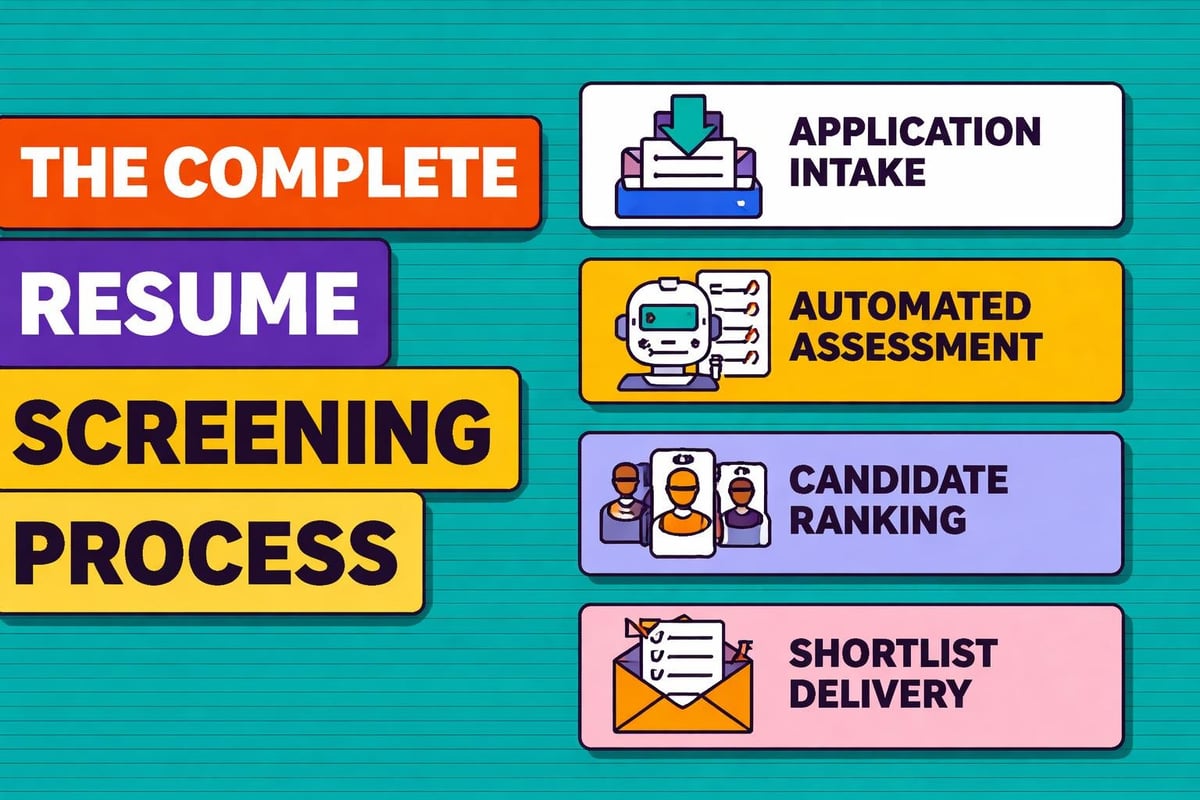
Advanced resume screener platforms leverage artificial intelligence and machine learning to continuously improve their evaluation accuracy. These systems learn from hiring patterns, understanding which candidate characteristics correlate with successful placements and long-term performance. The technology identifies relevant experience even when candidates use different terminology or come from non-traditional backgrounds, ensuring qualified applicants receive fair consideration.
Natural language processing capabilities enable these systems to understand context rather than simply matching keywords. For instance, a resume screener can recognize that "managed a team of software developers" relates to leadership experience, even if the job description specifies "team management." This contextual understanding significantly reduces false negatives where qualified candidates might be overlooked due to slight variations in phrasing.
Integration capabilities represent another critical technological component. Modern resume screener solutions connect seamlessly with applicant tracking systems, human resource information systems, and other recruitment technology. This integration ensures data flows smoothly throughout the hiring workflow, eliminating manual data entry and reducing the risk of information loss or duplication.
The implementation of machine learning algorithms in automating resume screening has demonstrated measurable improvements in both efficiency and fairness. By removing unconscious bias from initial screening and applying consistent evaluation criteria, these systems help organizations build more diverse talent pipelines while accelerating the overall recruitment timeline.
Key Benefits of Implementing a Resume Screener
Time savings represent the most immediately apparent advantage of deploying a resume screener. What traditionally required hours or even days of manual review can now be accomplished in minutes. Recruitment teams report reducing their initial screening time by up to 75%, allowing them to redirect those hours toward higher-value activities like candidate engagement, interview preparation, and strategic workforce planning.
Quality improvements often surprise organizations new to automated screening. Rather than diminishing the candidate experience, a well-configured resume screener actually enhances it by ensuring faster response times and more consistent evaluation. Candidates receive timely feedback, and qualified applicants move through the process more quickly, reducing the risk of losing top talent to competing offers.
Scalability becomes dramatically easier with automated screening technology. Organizations experiencing rapid growth or seasonal hiring spikes no longer need to proportionally increase their recruitment staff or sacrifice quality during high-volume periods. The resume screener maintains consistent performance whether processing 50 applications or 5,000, providing the same thorough evaluation for every candidate.
Cost efficiency extends beyond direct labor savings. By identifying qualified candidates more accurately and quickly, organizations reduce their cost-per-hire, shorten vacancy periods, and improve overall hiring ROI. The technology also minimizes the costs associated with poor hiring decisions by ensuring only genuinely qualified candidates advance to later stages.
Compliance and documentation improve substantially when using a resume screener. These systems maintain detailed records of evaluation criteria, scoring rationale, and decision points, providing clear audit trails that demonstrate fair and consistent hiring practices. This documentation proves invaluable during compliance reviews or when addressing questions about hiring decisions.
Configuring Your Resume Screener for Optimal Results
Successful implementation begins with clearly defining role requirements and evaluation criteria. Recruitment teams should collaborate with hiring managers to identify must-have qualifications versus nice-to-have attributes, establishing a scoring framework that reflects actual job demands. This upfront investment in configuration pays dividends through more accurate candidate matching and reduced time spent reviewing unsuitable applications.
Testing and refinement represent ongoing necessities rather than one-time activities. Organizations should regularly review their resume screener performance, analyzing whether highly ranked candidates perform well in subsequent interview stages and, ultimately, in their roles. This feedback loop allows continuous optimization of scoring algorithms and evaluation criteria.
Effective resume screening techniques emphasize the importance of balancing automation with human judgment. While the resume screener handles initial evaluation and ranking, experienced recruiters should review top candidates before extending interview invitations. This hybrid approach combines technological efficiency with human insight, ensuring the best possible outcomes.
Customization options allow organizations to tailor their resume screener to specific industries, roles, and organizational cultures. Technical positions might prioritize specific programming languages or certifications, while customer-facing roles might emphasize communication skills and relevant experience. The ability to create role-specific screening profiles ensures appropriate evaluation across diverse position types.

Addressing Bias and Ensuring Fair Evaluation
Bias reduction represents one of the most compelling reasons organizations adopt resume screener technology. Traditional manual screening often introduces unconscious bias based on candidate names, educational institutions, employment gaps, or other factors unrelated to actual job qualifications. Properly configured automated systems evaluate candidates based solely on relevant criteria, promoting more equitable hiring practices.
Blind resume screening automation takes bias reduction further by anonymizing candidate information during initial evaluation. The resume screener can hide names, addresses, graduation dates, and other potentially identifying information, ensuring evaluation focuses exclusively on skills, experience, and qualifications. This approach has proven particularly effective in increasing diversity among shortlisted candidates.
Regular auditing of screening outcomes helps identify and correct any unintended bias that might emerge over time. Organizations should monitor whether their resume screener produces diverse candidate pools and whether certain demographic groups disproportionately advance or are eliminated. These insights enable prompt adjustments to evaluation criteria or algorithm weighting.
Transparency in screening criteria builds trust with candidates and internal stakeholders. Organizations should be prepared to explain how their resume screener evaluates applications and what qualifications it prioritizes. This openness demonstrates commitment to fair hiring practices and helps candidates understand how to present their qualifications effectively.
Integration with Broader Recruitment Technology
A resume screener functions most effectively as part of an integrated recruitment ecosystem. Connection with AI-based recruitment platforms enables seamless data flow from application intake through final hiring decisions. This integration eliminates information silos, reduces manual handoffs, and ensures all stakeholders have access to current candidate information.
Compatibility with existing applicant tracking systems represents a critical consideration when selecting a resume screener. The system should enhance rather than disrupt established workflows, pulling candidate information automatically and pushing evaluation results back to the ATS without requiring manual intervention. This seamless operation ensures adoption across recruitment teams and maintains data integrity.
Email automation capabilities streamline candidate communication throughout the screening process. When integrated with a resume screener, these systems can automatically acknowledge applications, notify candidates of their status, and schedule interviews with qualified applicants. This automation improves candidate experience while reducing administrative burden on recruitment staff.
Analytics and reporting functionality provides valuable insights into screening effectiveness and recruitment metrics. Organizations can track time-to-shortlist, candidate quality scores, source effectiveness, and other key performance indicators. These insights inform strategic decisions about recruitment marketing, sourcing strategies, and process improvements. For teams interested in maximizing their hiring efficiency, exploring CV screening software options provides additional context on available features and capabilities.
Best Practices for Resume Screener Implementation
Change management deserves significant attention during resume screener deployment. Recruitment teams may initially resist automation, fearing job displacement or skeptical about technology's ability to match their expertise. Addressing these concerns through training, demonstration of benefits, and clear communication about how the technology augments rather than replaces human judgment proves essential for successful adoption.
Pilot programs allow organizations to test their resume screener on actual job openings before full-scale deployment. Starting with high-volume positions or roles with clearly defined qualification requirements provides valuable learning opportunities with manageable risk. Teams can refine configuration, validate accuracy, and build confidence in the technology before expanding to additional use cases.
Continuous monitoring and optimization ensure the resume screener maintains effectiveness over time. Job requirements evolve, labor markets shift, and organizational priorities change. Regular review of screening criteria, scoring weights, and evaluation outcomes allows the system to adapt accordingly, maintaining alignment with current needs.
Documentation of screening criteria and decision logic serves multiple purposes. It provides transparency for compliance requirements, enables knowledge transfer as team members change, and facilitates troubleshooting when results don't match expectations. Maintaining clear records of why the resume screener evaluates certain qualifications and how it weights different factors proves invaluable for ongoing management.
Vendor support and platform updates represent ongoing considerations beyond initial implementation. Organizations should evaluate potential providers based not only on current functionality but also on their commitment to continuous improvement, responsiveness to user feedback, and roadmap for future enhancements. The recruitment technology landscape evolves rapidly, and the resume screener should evolve with it.
Measuring Resume Screener Performance and ROI
Establishing baseline metrics before implementing a resume screener enables accurate performance measurement. Organizations should document current time-to-shortlist, recruiter hours spent on initial screening, candidate quality indicators, and other relevant metrics. These baselines provide reference points for demonstrating the technology's impact and justifying continued investment.
Time-to-hire represents one of the most straightforward metrics for evaluating resume screener effectiveness. Organizations typically see significant reductions in the days required to move from job posting to shortlist creation. This acceleration benefits both the organization and candidates, reducing the risk of losing top talent to competing offers while vacancies remain unfilled.
Quality of hire metrics provide deeper insights into whether the resume screener identifies candidates who succeed in their roles. Tracking performance reviews, retention rates, and manager satisfaction for candidates hired through the automated screening process validates that efficiency gains don't come at the expense of hiring quality. Many organizations find that their resume screener actually improves quality of hire by eliminating human error and ensuring consistent evaluation.
Cost per hire calculations should account for both direct and indirect savings. Direct savings include reduced recruiter hours spent on initial screening and lower reliance on external recruiting agencies. Indirect savings emerge from shorter time-to-fill reducing productivity losses, better candidate quality decreasing turnover costs, and improved employer brand enhancing future recruiting efforts.
Candidate satisfaction metrics offer important perspectives on how automation affects the applicant experience. Surveys can assess whether candidates appreciate faster response times and clearer communication, or if they feel the automated process lacks personal touch. Understanding these perceptions allows organizations to optimize their approach, perhaps combining efficient resume screener technology with personalized communication for advancing candidates. Those exploring comprehensive solutions should consider how candidate evaluation integrates across the entire hiring workflow.
Advanced Features in Modern Resume Screeners
Predictive analytics capabilities represent the cutting edge of resume screener technology. Rather than simply matching current qualifications against job requirements, these advanced systems predict candidate success probability based on historical hiring data and performance outcomes. This predictive approach helps identify candidates with high potential who might not perfectly match traditional qualification checklists.
Skills gap analysis provides valuable insights beyond basic screening. Modern resume screener platforms can identify where candidates partially meet requirements, highlighting specific skills they lack. This information proves useful for internal mobility decisions, where existing employees might need modest upskilling to qualify for new roles, or when considering candidates with transferable skills from adjacent industries.
Candidate rediscovery functionality prevents qualified applicants from disappearing into resume databases. When new positions open, an advanced resume screener can automatically search previous applicants, identifying those who might fit the new role even if they weren't selected for their original application. This capability dramatically expands the effective size of talent pools without additional sourcing costs.
Multilingual processing capabilities enable global organizations to maintain consistent screening standards across regions. The resume screener can evaluate applications in multiple languages, normalizing the data into a common format for comparison. This functionality proves essential for companies with distributed operations or those recruiting international talent.
Customizable candidate communications allow organizations to maintain their employer brand voice while benefiting from automation. Modern resume screener platforms can generate personalized messages based on candidate qualifications, application status, and next steps. These communications feel more human than generic automated responses while still delivering the efficiency benefits of automation. For organizations looking to enhance their recruitment technology stack, exploring best AI recruitment tools provides broader context on complementary solutions.
Overcoming Common Resume Screener Challenges
Algorithm transparency concerns sometimes emerge when candidates or stakeholders question how automated systems make decisions. Organizations can address these concerns by clearly documenting evaluation criteria, providing explanations for screening decisions when requested, and maintaining human oversight of the process. Demonstrating that the resume screener applies consistent, job-related criteria builds confidence in the approach.
Technical limitations in parsing certain resume formats occasionally create challenges. Highly creative or visually complex resumes might not transfer cleanly through automated systems, potentially disadvantaging candidates in design-oriented fields. Organizations can address this by accepting multiple submission formats, manually reviewing problematic applications, or providing clear formatting guidelines to applicants.
Over-reliance on automation represents a risk when organizations eliminate appropriate human judgment from the process. The resume screener should augment recruiter capabilities rather than replace professional expertise entirely. Maintaining human review of highly ranked candidates ensures the technology serves as a tool rather than a replacement for experienced recruitment professionals.
Keeping pace with evolving job requirements demands ongoing attention to screening criteria. As roles change and new skills emerge, the resume screener configuration must be updated accordingly. Establishing regular review cycles and involving hiring managers in criteria updates ensures the system remains aligned with actual position needs.
Data privacy and security considerations require careful attention, particularly when processing personal information across jurisdictions with varying regulations. Organizations must ensure their resume screener complies with relevant data protection laws, maintains appropriate security controls, and provides transparency about how candidate information is used and stored.
Future Trends in Resume Screening Technology
Artificial intelligence capabilities continue advancing, with future resume screener systems expected to demonstrate even more sophisticated understanding of candidate qualifications. Natural language processing improvements will enable these systems to extract deeper insights from resumes, cover letters, and other application materials, identifying subtle indicators of potential that current systems might miss.
Integration with professional networking platforms and public data sources will enable resume screener systems to automatically enrich candidate profiles with verified information about skills, endorsements, and professional accomplishments. This enrichment reduces reliance on self-reported information while providing more comprehensive candidate views.
Conversational AI interfaces may transform how candidates interact with screening systems. Rather than submitting static resumes, applicants might engage in dynamic conversations where the resume screener asks clarifying questions, explores relevant experience in depth, and assesses communication skills simultaneously with qualification evaluation.
Skill-based screening will likely continue displacing traditional credential-focused approaches. Future resume screener platforms will emphasize demonstrable capabilities over educational pedigree or previous employer prestige, helping organizations access broader talent pools and support career mobility for candidates from non-traditional backgrounds.
Continuous candidate assessment may extend beyond initial application screening. Advanced resume screener systems could maintain ongoing evaluation of candidate qualifications, automatically updating rankings as individuals gain new certifications, complete relevant projects, or develop additional skills. This dynamic approach ensures organizations can quickly identify qualified candidates when new positions emerge.
Modern recruitment demands tools that can process high application volumes without sacrificing quality or introducing bias. A resume screener addresses these challenges by automating initial evaluation, ensuring consistent application of job-relevant criteria, and delivering ranked shortlists that enable recruiters to focus their expertise where it matters most. Klearskill delivers exactly this capability, using AI to analyze candidate CVs and rank applicants to give recruiters qualified shortlists in moments, transforming hiring efficiency while maintaining the human judgment that makes final selection successful.


