
April 4, 2026
Data Analyst Fresher Resume Guide for 2026
Breaking into the data analytics field as a fresh graduate requires more than technical knowledge and academic credentials. Your resume serves as the first impression you make on potential employers, and in a competitive job market, understanding how to structure and optimize your data analyst fresher resume can determine whether you land an interview or get lost in the applicant pool. Modern recruitment systems rely heavily on AI-powered screening tools that evaluate resumes within seconds, making it essential to craft a document that appeals to both automated systems and human recruiters.
Understanding What Recruiters Look for in Entry-Level Data Analysts
Recruiters scanning through dozens of applications daily need to quickly identify candidates who demonstrate foundational technical competencies alongside problem-solving abilities. A well-crafted data analyst fresher resume should immediately communicate your grasp of essential tools like SQL, Python, Excel, and data visualization platforms. Beyond technical skills, AI resume screening systems often prioritize candidates who show analytical thinking through academic projects, internships, or relevant coursework.
The challenge for fresh graduates lies in balancing limited professional experience with the need to demonstrate practical skills. Your resume needs to highlight transferable abilities gained through university projects, online certifications, hackathons, or volunteer work involving data analysis. Modern recruitment platforms evaluate resumes based on keyword relevance, formatting clarity, and quantifiable achievements that suggest future job performance.
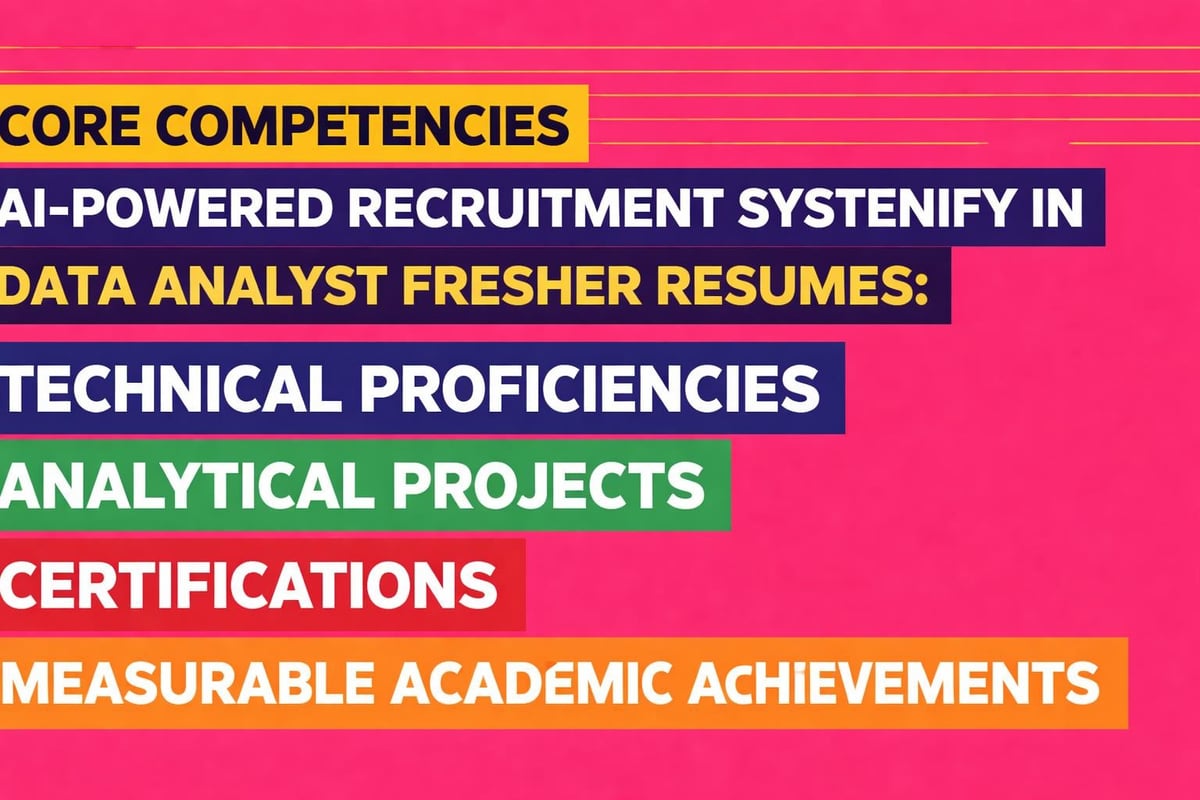
Understanding how AI-based recruitment platforms process applications helps you optimize your document for both machine readability and human appeal. These systems parse your resume for specific technical terms, educational qualifications, and demonstrated experiences that match job descriptions. Fresh graduates should focus on making every section count by incorporating relevant keywords naturally while maintaining readability.
Structuring Your Data Analyst Fresher Resume for Maximum Impact
The structure of your data analyst fresher resume determines how easily recruiters can extract key information. Start with a clear header containing your full name, phone number, professional email address, LinkedIn profile, and portfolio or GitHub link if applicable. Avoid cluttering this section with unnecessary details like full mailing addresses, which take up valuable space without adding value.
Your professional summary should follow immediately after the header. This three to four sentence paragraph serves as your elevator pitch, summarizing your educational background, key technical skills, and career aspirations. For fresh graduates, focus on your academic achievements, relevant coursework, and enthusiasm for turning data into actionable insights. Avoid generic statements that could apply to any candidate; instead, mention specific tools or methodologies you've mastered.
The education section carries significant weight in a data analyst fresher resume since professional experience may be limited. List your most recent degree first, including your university name, degree type, major, graduation date, and GPA if it's above 3.5. Include relevant coursework that demonstrates your analytical foundation, such as statistics, machine learning, database management, or econometrics. Academic honors, scholarships, or dean's list recognition should also appear here.
Technical skills deserve prominent placement on your resume, typically organized into categories for easy scanning. According to Coursera's comprehensive guide, grouping skills by category helps recruiters quickly assess your capabilities. Consider organizing them into programming languages, data visualization tools, database management systems, statistical software, and analytical frameworks. Be honest about your proficiency levels and only list tools you can confidently discuss in an interview.
Showcasing Projects and Practical Experience Effectively
Projects form the backbone of a compelling data analyst fresher resume when professional experience is limited. Each project listing should include a descriptive title, brief context about the problem you addressed, tools and techniques you employed, and quantifiable results or insights you generated. Rather than simply listing what you did, emphasize the impact your analysis created or the business questions you answered.
Academic projects that involved real datasets, complex analysis, or collaborative teamwork deserve detailed descriptions. If you built a customer segmentation model during a marketing analytics course, explain the dataset size, clustering algorithms you tested, and how your recommendations could improve targeting strategies. When describing any project on your data analyst fresher resume, use action verbs like analyzed, developed, designed, implemented, or optimized to convey proactive engagement.
Internships, even if brief or unpaid, provide invaluable credibility on your resume. Detail your responsibilities, the scope of data you handled, and specific contributions you made. If you helped automate a reporting process that saved three hours weekly or identified trends that influenced marketing strategy, quantify these achievements. Numbers resonate with recruiters because they demonstrate tangible value you brought to previous organizations.
Freelance work, volunteer data projects, or contributions to open-source analytics initiatives also strengthen your application. Many nonprofits need data analysis assistance but lack resources to hire professionals, creating opportunities for fresh graduates to gain practical experience. Document these engagements professionally on your data analyst fresher resume, treating them with the same rigor as paid positions. Resume.io's examples demonstrate how to frame various types of experience compellingly.
Optimizing Keywords and Formatting for ATS Systems
Modern recruitment relies heavily on applicant tracking systems that parse resumes before human eyes review them. Your data analyst fresher resume must pass through these digital gatekeepers by incorporating relevant keywords from job descriptions while maintaining natural readability. Study multiple job postings in your target field and note frequently mentioned technical skills, qualifications, and responsibilities.
Integrate these keywords throughout your resume, particularly in your skills section, project descriptions, and professional summary. When a job posting emphasizes SQL expertise and data visualization capabilities, ensure your resume explicitly mentions these terms rather than assuming recruiters will infer them from related experiences. However, avoid keyword stuffing, which can make your document read awkwardly and raise red flags with sophisticated CV screening software.
Formatting choices significantly impact how well systems can parse your data analyst fresher resume. Stick to standard section headings like Education, Skills, Projects, and Experience rather than creative alternatives that might confuse parsing algorithms. Use simple, clean fonts like Arial, Calibri, or Times New Roman in 10 to 12 point size. Avoid headers, footers, text boxes, tables, or graphics that can disrupt automated parsing.
Save your resume as both a Word document and PDF, submitting whichever format the application specifies. While PDFs preserve formatting across different devices, some older systems struggle to parse them accurately. The Hays Canada resume guide emphasizes that following submission instructions precisely demonstrates attention to detail, a critical quality for data analysts.
Highlighting Certifications and Continuous Learning
Certifications strengthen your data analyst fresher resume by demonstrating initiative, specialized knowledge, and commitment to professional development. Industry-recognized credentials from platforms like Google, Microsoft, IBM, or Tableau validate your technical competencies and often teach practical skills directly applicable to job responsibilities. Fresh graduates should prioritize certifications that align with their target roles and complement their academic background.
Popular certifications for entry-level data analysts include Google Data Analytics Professional Certificate, Microsoft Certified Data Analyst Associate, IBM Data Analyst Professional Certificate, and Tableau Desktop Specialist. Each certification signals competency in specific tools or methodologies that employers value. List certifications in a dedicated section with the credential name, issuing organization, and completion date. If you're currently pursuing a certification, you can include it with an expected completion date.
Online courses from Coursera, edX, DataCamp, or Udacity provide additional learning opportunities to list on your data analyst fresher resume. While less formal than certifications, completed courses in specialized topics like machine learning, advanced SQL, or R programming demonstrate your commitment to expanding your skill set. Be selective about which courses you include, focusing on those most relevant to your target positions.
Technical workshops, bootcamps, or industry conferences you've attended can also appear in a professional development section. These experiences show engagement with the data analytics community and awareness of current industry trends. Fresh graduates who participate in data science competitions like Kaggle challenges should mention notable achievements or rankings, as these experiences demonstrate practical problem-solving under realistic constraints.
Crafting Compelling Descriptions of Technical Competencies
The way you describe your technical abilities on your data analyst fresher resume can differentiate you from candidates with similar skill sets. Rather than simply listing "Python" or "SQL," provide context about how you've applied these tools. For instance, mention that you used Python libraries like Pandas and NumPy for data manipulation and Matplotlib for visualization in multiple academic projects. This specificity helps recruiters understand the depth of your capabilities.
When describing proficiency with Excel, specify advanced functions you've mastered beyond basic spreadsheet operations. Mention experience with pivot tables, VLOOKUP and XLOOKUP functions, conditional formatting, macros, or Power Query. Many organizations still rely heavily on Excel for data analysis, and demonstrating sophisticated spreadsheet skills can be surprisingly valuable for entry-level positions.
Database query skills deserve detailed attention on your data analyst fresher resume. If you've written complex SQL queries involving multiple joins, subqueries, window functions, or common table expressions, say so explicitly. Mention the database management systems you've worked with, whether MySQL, PostgreSQL, Microsoft SQL Server, or others. Understanding database fundamentals signals that you can work with real-world data storage systems rather than just cleaned academic datasets.
Data visualization abilities increasingly distinguish strong candidates from average ones. Specify which tools you've used to create compelling visual narratives, whether Tableau, Power BI, Looker, or Python libraries like Seaborn and Plotly. Resume Worded's examples show how successful candidates emphasize their ability to communicate insights visually, not just perform calculations.
Tailoring Your Resume to Specific Job Opportunities
Generic resumes rarely succeed in competitive applicant pools. Each data analyst fresher resume you submit should be customized to match the specific requirements and language of the job description. This doesn't mean fabricating skills or experience, but rather emphasizing the aspects of your background most relevant to each opportunity. Study the job posting carefully and identify which of your projects, skills, or experiences best align with stated requirements.
When a position emphasizes predictive modeling, highlight your machine learning coursework and any projects where you built forecasting models. If the role focuses on business intelligence and reporting, emphasize your dashboard creation experience and ability to communicate findings to non-technical stakeholders. This strategic emphasis helps both automated systems and human reviewers quickly recognize your fit for the position.
Pay attention to the industry context of each opportunity. A data analyst role at a healthcare organization might value experience with patient data, HIPAA compliance awareness, or familiarity with medical terminology, while a retail position might prioritize customer analytics or inventory optimization experience. Adjust your project descriptions and professional summary to reflect understanding of industry-specific challenges and applications of data analysis.
The Dice.com template guide suggests maintaining a master resume document containing all your experiences, skills, and projects, then creating targeted versions for different application types. This approach ensures you don't accidentally omit important details while still customizing each submission. Modern AI tools for talent acquisition can quickly identify when resumes align closely with job requirements, making this customization effort worthwhile.
Common Mistakes to Avoid in Entry-Level Data Analyst Resumes
Several common errors can undermine an otherwise strong data analyst fresher resume. Typos and grammatical mistakes suggest carelessness, a particularly damaging impression for roles requiring attention to detail. Proofread your document multiple times and consider having trusted peers or mentors review it before submission. Simple errors can result in immediate disqualification during initial screening stages.
Overstating your abilities creates problems during technical interviews when you can't demonstrate claimed proficiencies. If you've only completed an introductory R course, don't list yourself as proficient in R programming. Instead, indicate your familiarity level honestly or focus on specific applications you've successfully completed. Recruiters appreciate candidates who accurately represent their capabilities rather than those who oversell and underdeliver.
Vague descriptions that lack specific details or quantifiable outcomes waste valuable resume space. Statements like "worked with data" or "performed analysis" tell recruiters nothing meaningful about your capabilities. Transform these generic phrases into concrete descriptions like "analyzed 50,000 customer transaction records to identify purchasing patterns, resulting in three actionable marketing recommendations" that demonstrate both technical ability and business impact.
Including irrelevant information dilutes your message and suggests poor judgment about what matters professionally. Your high school achievements, unrelated hobbies, or personal details like marital status have no place on your data analyst fresher resume. Every line should support your candidacy for analytical roles. Focus on experiences that demonstrate problem-solving skills, technical competencies, or analytical thinking.
Inconsistent formatting creates a disorganized impression that undermines your attention to detail. Ensure your date formats, bullet point styles, font sizes, and spacing remain consistent throughout the document. BeamJobs' extensive examples demonstrate how professional formatting enhances readability and creates positive first impressions.
Leveraging Additional Sections to Stand Out
Strategic additional sections can differentiate your data analyst fresher resume from dozens of similar applications. A publications or research section becomes valuable if you've contributed to academic papers, presented at conferences, or published analysis on platforms like Medium or Towards Data Science. Even if you weren't the primary author, being part of research projects involving data analysis demonstrates scholarly rigor and collaborative ability.
Relevant coursework deserves its own section when your academic background strongly aligns with data analytics. Rather than listing every class you took, select five to eight courses that directly relate to data analysis, statistics, programming, or business intelligence. Include course names that clearly communicate content, as recruiters may not be familiar with your university's specific course numbering system.
Language proficiencies can provide competitive advantages, particularly for positions at global companies or roles involving international datasets. List languages beyond English along with proficiency levels, using standard descriptors like conversational, professional, or fluent. For data analysts, Python and R programming languages don't belong here but in your technical skills section.
Professional affiliations show engagement with the broader analytics community. Student memberships in organizations like the International Institute for Analytics, Association for Computing Machinery, or local data science meetup groups signal your commitment to the field. Including leadership roles in these organizations further demonstrates initiative and organizational abilities.
Volunteer experiences involving data can distinguish your data analyst fresher resume while showcasing your values. If you've helped a nonprofit analyze donor data, evaluated program effectiveness for a community organization, or contributed analytical skills to social causes, these experiences demonstrate both technical ability and social responsibility. Many employers value candidates who apply their skills to make positive impacts beyond purely commercial applications.
Preparing Your Resume for Modern Recruitment Technologies
As recruitment technology evolves, understanding how platforms like Klearskill analyze candidate resumes helps you optimize your application materials. These systems evaluate not just keyword matches but also the structure, coherence, and relevance of your experiences to specific role requirements. Your data analyst fresher resume should be both machine-readable and compelling to human reviewers who ultimately make hiring decisions.
Consistency in terminology throughout your resume improves both ATS parsing and readability. If you mention SQL in your skills section, use the same term rather than alternating with "Structured Query Language" in project descriptions. This consistency helps automated systems accurately assess your qualifications while making your resume easier for humans to scan quickly.
Strategic placement of important information recognizes how both algorithms and people review resumes. Critical qualifications should appear in multiple sections rather than mentioned only once. For instance, if Python programming is essential for your target roles, it should appear in your skills section, project descriptions, and potentially your professional summary. This repetition reinforces your expertise without appearing redundant if done naturally.
File naming conventions matter more than many candidates realize. Save your document as "FirstName_LastName_Data_Analyst_Resume.pdf" rather than generic names like "Resume.pdf" or "MyResume_Final_v3.pdf." This professional naming helps recruiters organize files and demonstrates basic organizational competency. When systems allow, include the job title or company name in your filename to show you've tailored your application.
Understanding how AI-based recruitment platforms rank candidates helps you appreciate why certain formatting and content choices matter. These systems often evaluate educational pedigree, skill relevance, project complexity, and quantifiable achievements simultaneously, creating composite scores that determine which applications receive human review. Your data analyst fresher resume should excel across all these dimensions rather than focusing narrowly on just technical skills or just educational credentials.
Building a Portfolio to Complement Your Resume
While your data analyst fresher resume provides an overview of your qualifications, a portfolio offers deeper evidence of your analytical capabilities. Creating a GitHub repository showcasing several well-documented projects allows recruiters to evaluate your coding style, problem-solving approach, and ability to communicate technical work. Each portfolio project should include clear README files explaining the business problem, your analytical approach, and key findings.
Select portfolio projects that demonstrate different aspects of data analytics. One project might showcase your SQL skills through complex database queries, another could highlight machine learning model development, and a third might focus on creating interactive visualizations. This diversity proves versatility and readiness to handle various analytical challenges in professional settings.
Documentation quality in your portfolio reflects professionalism and communication skills. Include comments in your code explaining complex logic, use meaningful variable names, and structure your analysis in logical steps that others can follow. Many hiring managers review portfolios specifically to assess whether candidates can produce work that teammates could understand and build upon.
Link to your portfolio from your data analyst fresher resume, typically in the header section alongside your LinkedIn profile. Ensure the portfolio is publicly accessible and well-organized before sharing the link. A disorganized or incomplete portfolio can hurt your candidacy more than having no portfolio at all, so invest time in making it polished and professional.
Consider writing blog posts explaining your analytical approach to interesting datasets or industry trends. Publishing on platforms like Medium or personal websites demonstrates communication skills while providing additional examples of your analytical thinking. These writings can differentiate you from candidates who have similar technical skills but haven't demonstrated ability to explain complex concepts to broader audiences.
Navigating the Application Process Strategically
Submitting your data analyst fresher resume represents just the first step in a broader application strategy. Research companies thoroughly before applying, understanding their data infrastructure, analytical challenges, and business models. This knowledge helps you customize your resume more effectively and prepares you for potential interviews. Companies appreciate candidates who demonstrate genuine interest beyond simply wanting any data analyst position.
Timing your applications can influence success rates. Many organizations hire entry-level analysts at specific times, often aligned with budget cycles or seasonal business needs. Submitting applications early in recruiting cycles, typically early fall or early spring for many industries, can increase visibility before applicant pools become overwhelming. Follow companies you're interested in on LinkedIn to learn about new openings quickly.
Following up appropriately after submitting your data analyst fresher resume shows persistence without becoming annoying. If you haven't heard back within two weeks, a brief, polite email to the recruiter or hiring manager expressing continued interest can sometimes move your application forward. Reference specific aspects of the role that excite you and reiterate your qualifications concisely.
Networking complements formal applications by creating additional pathways to opportunities. Attend virtual or in-person data analytics meetups, participate in online communities, and reach out to alumni from your university working in data analytics. These connections can provide referrals, insider information about company culture, or advance notice of openings before they're publicly posted. Many positions are filled through referrals before ever being advertised widely.
Understanding how automated hiring tools function in modern recruitment helps you appreciate why some applications receive responses while others don't. These systems prioritize candidates whose qualifications most closely match stated requirements, making it essential that your data analyst fresher resume clearly demonstrates those alignments. Rather than applying to every possible position, focus on roles where you genuinely meet the core requirements and can demonstrate enthusiasm for the specific opportunity.
Creating an effective data analyst fresher resume requires balancing technical accuracy with compelling storytelling about your analytical journey and potential. By optimizing both content and format for modern recruitment technologies while maintaining readability for human reviewers, you significantly improve your chances of moving past initial screening stages. When you're ready to see how your carefully crafted resume performs against real-world standards, Klearskill can help recruiters quickly identify your strengths through AI-powered analysis that ranks candidates fairly and efficiently, ensuring your qualifications receive the attention they deserve.


