
March 31, 2026
CV Parsing Tool: Transform Recruitment Efficiency in 2026
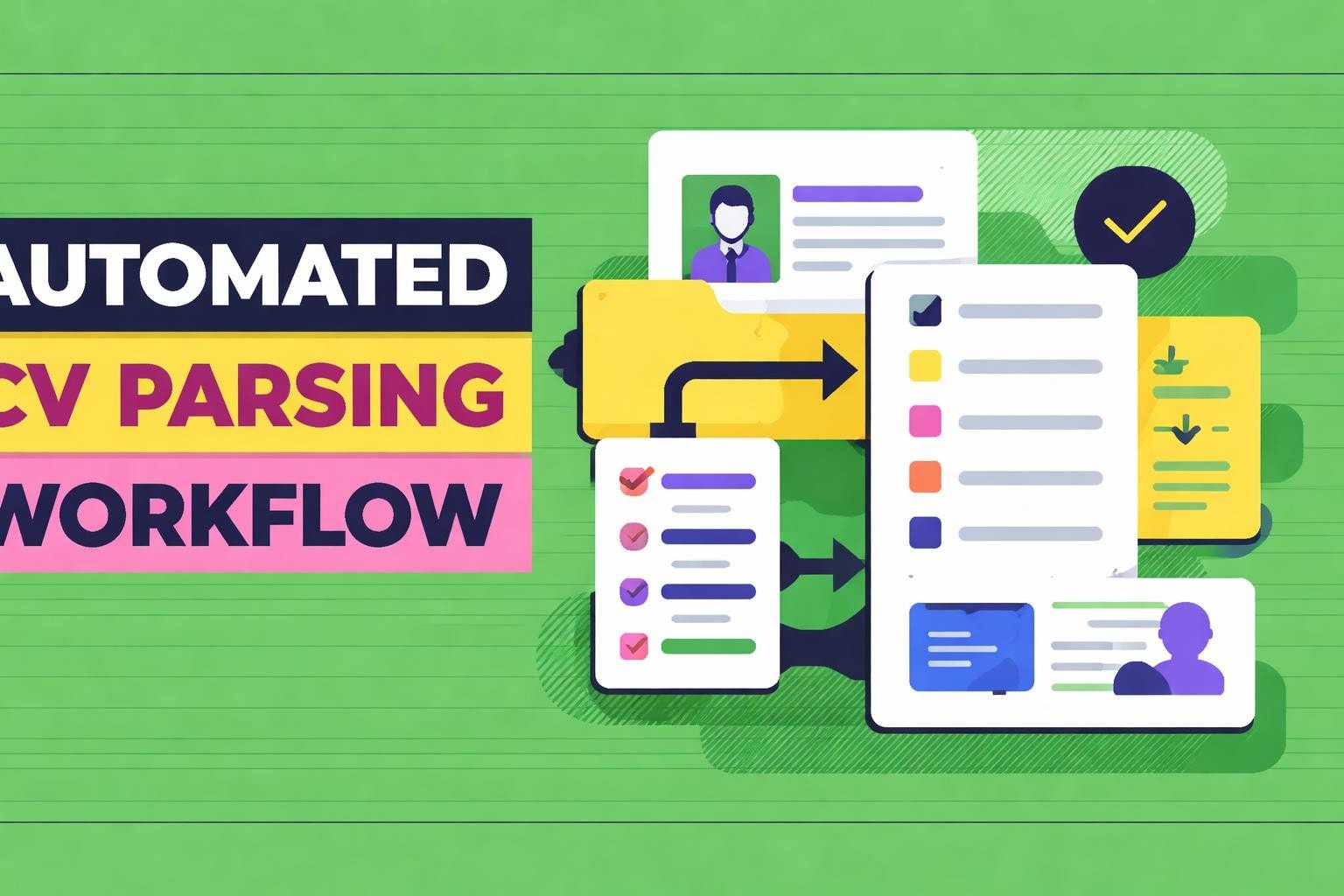
Modern recruitment teams face an overwhelming challenge: processing hundreds or thousands of resumes for a single position while maintaining quality and speed. A cv parsing tool addresses this bottleneck by automatically extracting candidate information from resumes and converting it into structured, searchable data. This technology has become essential for recruitment operations in 2026, enabling teams to focus on strategic hiring decisions rather than manual data entry. Understanding how these tools work and selecting the right solution can dramatically improve your hiring outcomes while reducing time-to-hire.
What Is a CV Parsing Tool
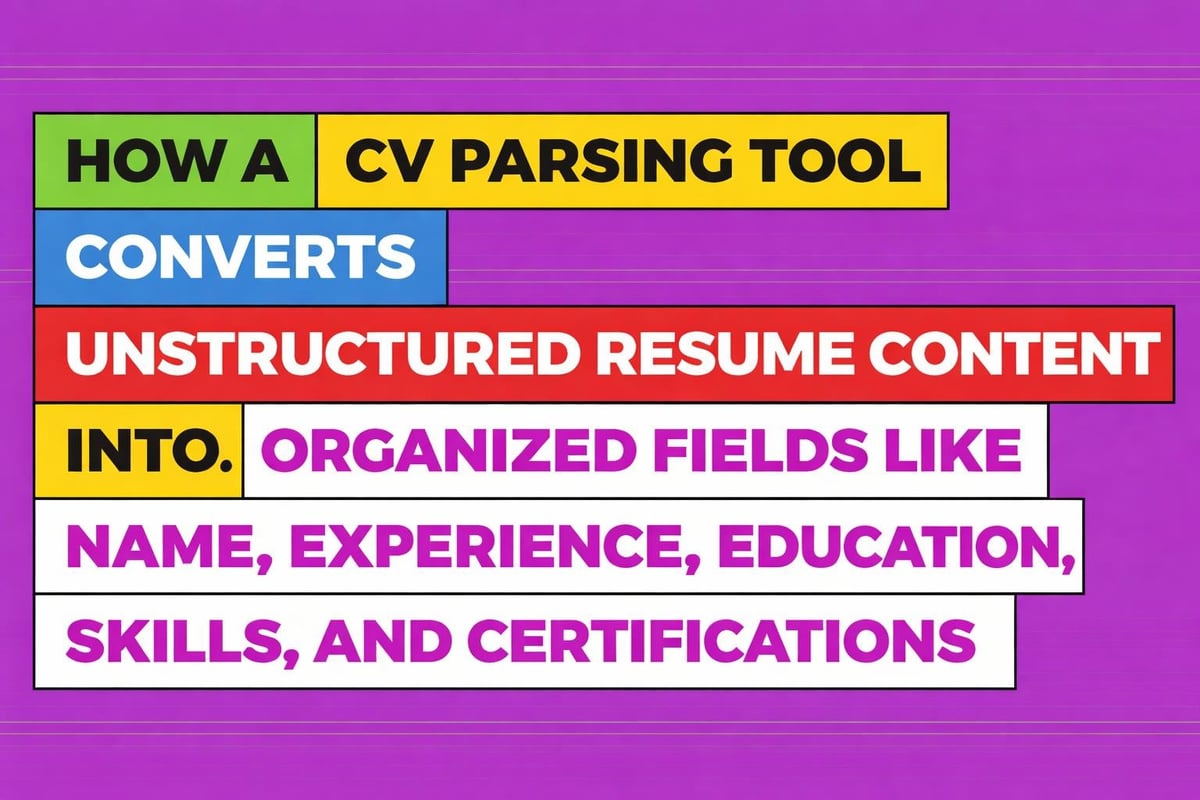
A cv parsing tool is specialized software that reads resumes in various formats and automatically extracts relevant information such as contact details, work experience, education, skills, and certifications. The technology uses pattern recognition, natural language processing, and machine learning algorithms to identify and categorize information from unstructured documents. Unlike manual data entry, which requires recruiters to read each resume and input information into an applicant tracking system, resume parsing happens in seconds and eliminates human transcription errors.
The parsing process begins when a candidate submits their resume through an application portal or email. The cv parsing tool immediately scans the document, regardless of whether it arrives as a PDF, Word document, or plain text file. Advanced parsers can handle diverse formatting styles, from chronological resumes to creative designs, ensuring that critical information is captured accurately. This capability is particularly valuable when dealing with international applications where resume formats vary significantly across regions and cultures.
Core Components of Parsing Technology
The effectiveness of a cv parsing tool depends on several technological components working together. Optical character recognition forms the first layer, converting scanned documents or images into machine-readable text. Natural language processing then analyzes this text to understand context and meaning, distinguishing between a job title and a company name, or separating educational institutions from degree names.
Machine learning models trained on millions of resumes recognize patterns and improve accuracy over time. These models learn to identify variations in how candidates present information, such as abbreviating "Bachelor of Science" as "B.S." or listing skills in different sections. The CV parsing functionality has evolved significantly, with modern systems achieving accuracy rates above 95 percent for standard resume formats.
Structured data output represents the final component, organizing extracted information into standardized fields that integrate seamlessly with applicant tracking systems and recruitment databases. This standardization enables recruiters to search, filter, and compare candidates efficiently, transforming weeks of manual screening into minutes of targeted review.
Benefits of Implementing CV Parsing Technology
Time savings represent the most immediate and measurable benefit of deploying a cv parsing tool. Recruitment teams that previously spent five to ten minutes manually entering data from each resume can eliminate this task entirely. For organizations processing hundreds of applications per week, this translates to dozens of hours reclaimed for higher-value activities such as candidate engagement and interview coordination. The efficiency gains compound across the hiring lifecycle, particularly for companies managing multiple simultaneous requisitions.
Accuracy improvements occur naturally when automated systems replace manual data entry. Human fatigue, distraction, and varying interpretation of resume content lead to inconsistent data quality. A cv parsing tool applies identical standards to every document, ensuring that candidate records are complete and reliable. This consistency becomes critical when building talent pools or conducting analytics on candidate demographics and qualifications. Enhanced data quality supports better decision-making and reduces the risk of overlooking qualified candidates due to incomplete information.
Candidate experience benefits significantly from parsing automation. Applications process immediately rather than sitting in a queue waiting for manual review. Candidates receive faster acknowledgment of their submissions, and qualified individuals move through screening stages more quickly. This responsiveness signals organizational efficiency and respect for candidate time, strengthening your employer brand in competitive talent markets. Organizations using automated hiring tools consistently report higher candidate satisfaction scores.
Enhanced Search and Matching Capabilities
Structured data from a cv parsing tool enables sophisticated search functionality that manual processes cannot match. Recruiters can instantly find candidates with specific skill combinations, minimum years of experience in particular technologies, or educational backgrounds from designated institutions. Boolean search operators, filters, and custom queries turn your candidate database into a strategic asset rather than a static archive.
Semantic matching takes search capabilities further by understanding relationships between skills and roles. When a cv parsing tool recognizes that a candidate has experience with Python programming, it can also flag relevant competencies in data analysis, automation, or machine learning. This contextual understanding helps identify candidates who may not use exact keyword matches but possess transferable or equivalent skills. The technology supporting AI-powered recruitment leverages these connections to surface non-obvious matches.
Duplicate detection prevents the same candidate from appearing multiple times in your database under slight name variations or different email addresses. Parsing tools can recognize when John Smith who applied in January is the same person as J. Smith who submitted an updated resume in March, maintaining clean data and preventing confusion during candidate review.
Key Features to Evaluate in CV Parsing Solutions
Multi-format support stands as a fundamental requirement for any cv parsing tool. Candidates submit resumes in dozens of file types, including Microsoft Word documents, PDFs, plain text files, HTML pages, and occasionally even image files. Your parsing solution must handle this variety without requiring candidates to convert their documents. Additionally, the tool should maintain accuracy across different document structures, from traditional chronological formats to modern infographic-style resumes that prioritize visual design.
Language and regional adaptability ensure your cv parsing tool performs effectively across global talent pools. Different countries follow distinct resume conventions, terminology, and formatting standards. A parser optimized for American resumes may struggle with European CV formats that include photographs and personal details, or Asian formats with different name ordering conventions. Multilingual parsing capabilities enable organizations to recruit internationally without maintaining separate systems for each region.
Integration and Customization Options
Seamless integration with existing recruitment technology represents a critical evaluation criterion. Your cv parsing tool should connect directly with your applicant tracking system, eliminating the need for manual data transfer between platforms. API availability enables custom integrations with proprietary systems or specialized recruitment tools. Organizations using popular applicant tracking systems should verify compatibility before committing to a parsing solution.
Customizable field mapping allows you to align parsed data with your specific organizational requirements. Standard parsing extracts common fields such as name, email, phone, work history, and education. However, your organization may track additional information such as security clearances, professional certifications, or industry-specific credentials. Configurable parsers let you define custom fields and train the system to extract this specialized information consistently.
Data enrichment features extend parsing beyond simple extraction by adding contextual information. Advanced cv parsing tools can validate email addresses, standardize job titles against industry taxonomies, score skill proficiency based on years of experience, or append company information to employment history. These enhancements transform raw parsed data into actionable intelligence that supports better screening decisions.
Accuracy Considerations and Quality Assurance
Parser accuracy varies significantly across vendors and technologies, making thorough evaluation essential. Request accuracy metrics for resumes matching your typical candidate profiles, including format complexity and industry terminology. Standard benchmarks report accuracy percentages for individual field types, such as name extraction, email capture, or skill identification. Top-tier cv parsing tools achieve accuracy rates above 95 percent for standard fields and 85 to 90 percent for complex elements like skill extraction from diverse contexts.
Testing with real candidate resumes provides the most reliable assessment of parsing quality. Submit a sample of actual resumes from recent hiring processes to prospective vendors and compare parsed output against manual review. Pay particular attention to how the system handles unusual formatting, creative resume designs, or industry-specific terminology relevant to your hiring needs. This practical evaluation reveals limitations that may not appear in vendor-provided accuracy statistics.
Ongoing quality monitoring ensures sustained performance after implementation. Establish processes for reviewing parsed data periodically, particularly when recruiting for new roles or industries. Track error patterns and provide feedback to your vendor, as many modern cv parsing tools incorporate machine learning that improves with usage. Organizations committed to AI CV screening software should view parser accuracy as a continuous improvement opportunity rather than a static capability.
Handling Edge Cases and Exceptions
Non-standard resume formats present the greatest challenge for any cv parsing tool. Creative professionals often submit portfolio-style resumes with unconventional layouts, while international candidates may follow format conventions unfamiliar to parsing algorithms trained primarily on American resumes. Your solution should provide fallback mechanisms for these situations, such as manual review queues or assisted parsing where recruiters validate extracted information.
Ambiguous information requires intelligent interpretation that basic parsers may lack. When a candidate lists "Manager" as their title without additional context, is this a people manager, project manager, or product manager role? Advanced parsing systems use surrounding context such as job descriptions, company industry, or skill mentions to classify ambiguous titles more accurately. This contextual understanding separates sophisticated cv parsing tools from basic extraction utilities.
Incomplete or poorly formatted resumes test parser robustness. Some candidates submit resumes with missing contact information, vague employment dates, or minimal detail about responsibilities. Your cv parsing tool should gracefully handle these gaps, marking fields as incomplete rather than failing entirely or inserting incorrect data. Clear flagging of incomplete records enables recruiters to follow up for missing information rather than making assumptions.
Security and Compliance in CV Parsing
Data privacy regulations impose strict requirements on how organizations collect, store, and process candidate information. Your cv parsing tool must comply with relevant regulations such as GDPR in Europe, CCPA in California, or industry-specific requirements in sectors like healthcare or finance. Verify that your vendor provides data processing agreements, maintains appropriate security certifications, and can support your compliance obligations.
Candidate consent and transparency become particularly important when parsing extracts information that candidates may not have explicitly provided in structured form. While candidates submit resumes voluntarily, they should understand how their information will be processed and stored. Best practices include clear privacy notices during application submission and mechanisms for candidates to access, correct, or delete their parsed data. Automated resume screening software should incorporate privacy-by-design principles.
Secure data handling throughout the parsing process protects sensitive candidate information from unauthorized access or breaches. Evaluate whether your cv parsing tool encrypts data during transmission and storage, implements access controls that limit who can view parsed information, and maintains audit logs of data processing activities. Cloud-based parsers should provide detailed information about data center locations and security certifications.
Retention and Deletion Policies
Parsed candidate data should follow your organization's retention policies, which balance operational needs with privacy obligations. Many jurisdictions limit how long organizations can retain candidate information after a hiring decision. Your cv parsing tool should support automated deletion schedules that remove candidate data after specified periods, with exceptions for candidates who have consented to remain in your talent pool.
Right-to-deletion requests require mechanisms to completely remove candidate information from all systems. When a candidate exercises their right to be forgotten, your cv parsing tool and integrated systems must purge all parsed data, original resumes, and derivative information. Verify that your vendor can support complete deletion and provide confirmation of data removal.
Audit capabilities demonstrate compliance when regulators or candidates request information about data processing activities. Your cv parsing tool should maintain logs showing when resumes were parsed, what information was extracted, who accessed the data, and when deletion occurred. These audit trails provide evidence of compliant data handling and support investigation of any processing concerns.
Cost Structures and ROI Calculation
Pricing models for cv parsing tools vary widely across vendors and deployment options. Per-resume pricing charges a fixed fee for each document processed, making costs directly proportional to hiring volume. This model suits organizations with fluctuating recruitment needs but can become expensive during high-volume hiring periods. Subscription-based pricing offers unlimited parsing for a monthly or annual fee, providing predictable costs that benefit organizations with consistent hiring activity.
Tiered pricing structures combine volume limits with feature access, allowing organizations to select plans matching their requirements and scale up as needs grow. Entry-level tiers might include basic parsing with limited integrations, while premium tiers add advanced features such as skill taxonomies, duplicate detection, or priority support. Evaluate whether growth in hiring volume or feature requirements might push you into higher pricing tiers unexpectedly.
Return on investment calculations should account for both direct cost savings and productivity improvements. Calculate time savings by multiplying average minutes spent on manual data entry per resume by your typical application volume and recruiter hourly cost. Factor in quality improvements through reduced errors, faster time-to-hire, and better candidate matches. Organizations implementing best AI recruitment tools typically see ROI within three to six months through efficiency gains alone.
Hidden Costs and Implementation Considerations
Integration expenses can add significantly to the total cost of ownership for a cv parsing tool. While vendors may advertise low per-resume fees, connecting the parser to your existing systems may require custom development, consulting services, or middleware platforms. Request detailed implementation quotes that include integration with your specific technology stack rather than relying on advertised base prices.
Training and change management represent often-overlooked costs when deploying parsing technology. Recruiters accustomed to manual processes need training on how to work with parsed data, validate extraction accuracy, and leverage enhanced search capabilities. Time invested in change management ensures adoption and helps your team realize the full value of the cv parsing tool rather than reverting to familiar manual workflows.
Ongoing maintenance includes updates to handle evolving resume formats, new file types, or changing compliance requirements. Verify whether your pricing includes regular updates and feature improvements or whether major enhancements require additional fees. Cloud-based parsers typically include automatic updates, while on-premise solutions may require manual upgrades or separate maintenance contracts.
Selection Process and Vendor Evaluation
Requirements gathering should begin by documenting your specific parsing needs, including typical resume volumes, formats encountered, languages processed, and critical data fields. Engage stakeholders across recruitment, HR technology, and compliance teams to ensure comprehensive requirements. Consider future needs as well, such as plans to expand international recruiting or hire for new industries with specialized terminology.
Vendor demonstrations provide opportunities to assess cv parsing tools with your actual use cases. Rather than accepting generic demonstrations, request that vendors process sample resumes from your recent hiring activities. Evaluate how well each solution handles your specific resume formats, extracts your critical data fields, and integrates with your existing systems. The CV parsing benefits for recruitment become clear when you see the technology applied to your real-world scenarios.
Reference checks with current customers reveal insights that marketing materials cannot provide. Request references from organizations with similar hiring volumes, industries, and technical environments. Ask specific questions about implementation challenges, ongoing support quality, accuracy in production use, and whether the vendor delivered on promised capabilities. Current users can also share unexpected benefits or limitations discovered after deployment.
Pilot programs reduce risk by allowing limited testing before full commitment. Many cv parsing tool vendors offer trial periods or pilot programs where you can process actual resumes and evaluate results with your team. Use this opportunity to test edge cases, validate integration quality, and assess user adoption. Establish clear success criteria before the pilot begins so you can make objective decisions based on measured results.
Future Trends in CV Parsing Technology
Artificial intelligence continues advancing cv parsing capabilities beyond simple pattern matching. Modern parsers use deep learning models that understand context, infer missing information, and recognize subtle indicators of candidate quality. How CV parsing improves recruitment will increasingly depend on AI that not only extracts data but also provides analytical insights about candidate suitability, potential longevity, or cultural fit.
Semantic understanding enables cv parsing tools to grasp meaning beyond keywords. Rather than simply matching the exact phrase "project management," advanced parsers recognize that experience leading cross-functional initiatives, coordinating stakeholder communication, or delivering complex implementations demonstrates project management capability. This semantic awareness reduces false negatives where qualified candidates use different terminology than job descriptions.
Predictive analytics integration transforms cv parsing tools from data extraction utilities into strategic recruitment intelligence platforms. By analyzing patterns across successful hires, parsers can identify attributes correlated with performance, retention, or rapid advancement. This predictive capability helps recruiters prioritize candidates most likely to succeed rather than simply those who match keyword requirements. Organizations adopting AI-powered CV parsers gain competitive advantages through data-driven hiring decisions.
Multimodal Parsing and Alternative Credentials
Video resume parsing represents an emerging frontier as candidates increasingly submit video introductions alongside traditional documents. Advanced cv parsing tools will extract information from video transcripts, analyze communication skills, and assess presentation quality. This multimodal capability provides richer candidate profiles while maintaining the automation benefits that make parsing valuable.
Alternative credential recognition will become essential as traditional degree requirements give way to skills-based hiring. Modern cv parsing tools must recognize and appropriately weight bootcamp certifications, online courses, professional portfolios, and open-source contributions. Parsing technology that treats a four-year degree as the only valid education credential misses qualified candidates who developed skills through alternative pathways.
Continuous parsing updates candidate profiles automatically as individuals add new skills, certifications, or experiences. Rather than requiring candidates to resubmit updated resumes, advanced systems monitor professional networks, certification databases, and public profiles to keep talent pool information current. This proactive updating ensures your candidate database remains a valuable asset rather than becoming outdated weeks after initial parsing.
The cv parsing tool has evolved from a simple data extraction utility into a strategic technology that transforms recruitment efficiency and effectiveness. By automating resume data capture, enhancing search capabilities, and ensuring consistent candidate evaluation, parsing technology enables recruitment teams to focus on relationship-building and strategic decision-making rather than administrative tasks. As hiring competition intensifies and candidate expectations rise, organizations that leverage sophisticated parsing capabilities gain measurable advantages in speed, quality, and candidate experience. Klearskill delivers advanced CV parsing combined with AI-powered candidate ranking, giving recruitment teams a shortlist of top candidates in moments rather than days, transforming how organizations identify and engage talent in 2026.


