
March 24, 2026
CV of Data Analyst: Complete Guide for Job Seekers 2026
The competitive landscape for data analyst positions in 2026 demands more than just technical competence. Your cv of data analyst serves as your first impression with potential employers and increasingly with AI-powered recruitment platforms that screen applications before human eyes review them. Understanding how to structure, optimize, and present your qualifications effectively can mean the difference between landing an interview and getting lost in the applicant pool. This comprehensive guide explores every aspect of creating a compelling data analyst CV that resonates with both automated screening systems and hiring managers.
Understanding the Modern CV of Data Analyst Landscape
The recruitment process has evolved significantly with the integration of artificial intelligence and automated resume screening software that analyzes applications within seconds. When crafting your cv of data analyst, you must consider two distinct audiences: the algorithmic systems that perform initial screening and the human recruiters who make final decisions.
Modern applicant tracking systems parse CVs for specific keywords, qualifications, and formatting structures. Your document needs to communicate expertise in data analysis while maintaining clarity that both machines and humans can process efficiently. This dual optimization represents one of the most significant challenges job seekers face today.
The average recruiter spends approximately seven seconds on an initial CV review, making the opening sections of your cv of data analyst absolutely critical. You need to immediately demonstrate value through quantifiable achievements and relevant technical skills. Generic descriptions and vague accomplishments simply will not capture attention in today's fast-paced hiring environment.
Essential Sections Your CV of Data Analyst Must Include
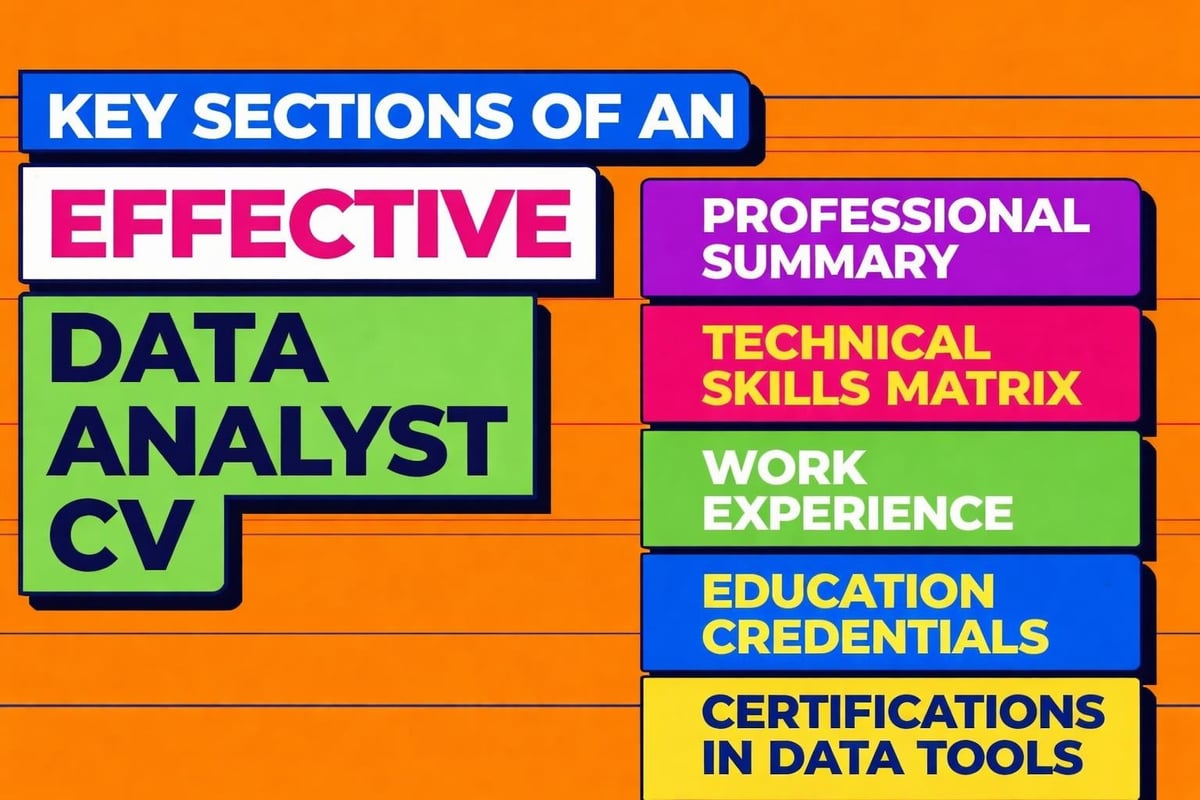
The professional summary sits at the top of your cv of data analyst and must deliver immediate impact. This three to four sentence section should encapsulate your years of experience, primary technical competencies, and most impressive achievement. Rather than writing a generic objective statement, focus on what you bring to potential employers.
Your technical skills section deserves prominent placement and careful organization. Data analyst positions require proficiency across multiple domains: programming languages like Python and R, database management through SQL, visualization tools such as Tableau and Power BI, and statistical analysis software. Group these skills logically rather than listing them randomly, allowing recruiters to quickly assess your capabilities.
Work experience forms the backbone of your cv of data analyst, and each position should follow a consistent structure. Begin with your job title, company name, location, and dates of employment. Then describe your responsibilities and achievements using action verbs and quantifiable metrics. Instead of stating you "analyzed data," specify that you "analyzed customer behavior data across 500,000 transactions, identifying patterns that increased retention by 23 percent."
Your education section should highlight relevant degrees, with particular emphasis on fields like statistics, mathematics, computer science, or business analytics. Include your graduation year, institution name, and any academic honors received. Recent graduates can expand this section with relevant coursework and projects, while experienced professionals should keep it concise.
Certifications and additional training demonstrate commitment to professional development in the rapidly evolving field of data analytics. Industry-recognized credentials from organizations like Microsoft, Google, or specialized programs in machine learning and big data add significant value to your cv of data analyst. According to comprehensive tips on crafting a data analyst resume, certifications can differentiate candidates in competitive markets.
Optimizing Technical Skills for Maximum Impact
Technical proficiency represents the foundation of any cv of data analyst, but presenting these skills effectively requires strategic thinking. Rather than creating an overwhelming list of every tool you have touched, prioritize those most relevant to your target positions and organize them by category.
Programming languages should appear first, with your strongest skills listed prominently. Python remains the most sought-after language for data analysts in 2026, followed closely by R for statistical computing and SQL for database queries. Specify your proficiency level honestly, whether expert, advanced, or intermediate.
Data visualization capabilities have become increasingly important as organizations seek analysts who can communicate insights to non-technical stakeholders. Proficiency in Tableau, Power BI, or similar platforms should feature prominently on your cv of data analyst. Many companies now use AI-powered recruitment tools that specifically scan for these visualization competencies.
Statistical and analytical methods form another critical category. Your cv of data analyst should mention specific techniques you employ: regression analysis, hypothesis testing, predictive modeling, or machine learning algorithms. This specificity demonstrates depth of knowledge beyond basic data manipulation.
Business intelligence and database technologies round out the technical skills landscape. Experience with platforms like SAP, Oracle, or cloud-based solutions such as AWS or Azure signals that you can work within enterprise environments. Understanding modern data infrastructure gives you an edge in larger organizations.
Showcasing Achievements with Quantifiable Results
The difference between a mediocre and exceptional cv of data analyst often comes down to how you present your accomplishments. Every achievement should include measurable outcomes that demonstrate business impact. Generic statements about "improving processes" or "supporting decision-making" fail to communicate actual value.
Transform your experience descriptions by incorporating specific metrics: percentage improvements, dollar amounts saved, time reduced, or volume of data processed. For example, rather than writing "created dashboards for sales team," write "designed interactive Tableau dashboards tracking 15 key metrics across 200 sales representatives, reducing report generation time by 40 percent and enabling data-driven territory adjustments that increased quarterly revenue by $2.3 million."
Project descriptions offer excellent opportunities to showcase your analytical thinking and problem-solving abilities. When including projects on your cv of data analyst, follow a structured approach: describe the business challenge, explain your analytical methodology, specify the tools and techniques used, and quantify the results achieved.
Cross-functional collaboration increasingly defines modern data analyst roles. Highlight instances where you partnered with marketing, finance, operations, or product teams to solve complex problems. These examples demonstrate that you can translate technical capabilities into business value across different departments.
Tailoring Your CV of Data Analyst for Specific Roles
One size does not fit all when it comes to data analyst applications. The most successful candidates customize their cv of data analyst for each position, aligning their qualifications with specific job requirements. This tailoring process begins with careful analysis of job descriptions to identify priority skills and responsibilities.
Industry specialization matters significantly in data analytics. A healthcare analytics position demands different domain knowledge than a financial services role. Your cv of data analyst should emphasize relevant industry experience and familiarity with sector-specific challenges, regulations, and data types.
Company size and stage influence the ideal candidate profile. Startups often seek generalists who can wear multiple hats, while established enterprises may want specialists focused on particular analytical domains. Research the organization before submitting your application and adjust your cv of data analyst accordingly.
The level of technical depth required varies across positions. Some roles emphasize advanced statistical modeling and machine learning, while others prioritize business intelligence and reporting. Review job postings carefully to determine where to place emphasis in your technical skills and project examples.
Keywords extracted from job descriptions should appear naturally throughout your cv of data analyst without resorting to keyword stuffing. Modern AI cv screening software has become sophisticated enough to recognize contextual relevance rather than simple keyword frequency. Focus on genuine alignment between your experience and position requirements.
Formatting and Structure Best Practices
Visual presentation significantly impacts how recruiters perceive your cv of data analyst. Clean, professional formatting that balances white space with content creates immediate credibility. Avoid overly creative designs that may confuse applicant tracking systems while maintaining enough visual hierarchy to guide readers through your qualifications.
Font selection should prioritize readability over style. Standard professional fonts like Arial, Calibri, or Times New Roman work best for a cv of data analyst. Size your headers between 14 and 16 points, with body text at 10 to 12 points. Consistency in formatting across sections demonstrates attention to detail.
Length considerations depend on your career stage. Entry-level professionals should target one page, while experienced analysts with extensive relevant experience can extend to two pages. Never exceed two pages unless you have exceptional circumstances that warrant additional space. Every line on your cv of data analyst should add value.
File format matters when submitting applications. Unless specifically requested otherwise, PDF format ensures your cv of data analyst maintains formatting across different systems and devices. Word documents can display differently depending on software versions and settings.
Contact information placement seems simple but mistakes occur frequently. Include your full name, phone number, email address, LinkedIn profile URL, and city/state of residence at the top of your cv of data analyst. Ensure your email address appears professional rather than using outdated or unprofessional handles from earlier in your career.
Common Mistakes That Undermine Your CV of Data Analyst
Excessive jargon without context represents one of the most frequent errors on a cv of data analyst. While technical terminology demonstrates expertise, you must balance it with clear explanations that non-technical hiring managers can understand. Remember that initial screeners may come from human resources rather than analytics departments.
Focusing exclusively on responsibilities rather than achievements weakens your cv of data analyst considerably. Your job description already exists; what matters to employers is how you excelled in that role. Every position should emphasize outcomes and contributions rather than simply listing daily tasks.
Outdated skills continue appearing on many data analyst CVs despite becoming obsolete. If your cv of data analyst prominently features tools that industry has moved beyond, you risk appearing out of touch with current practices. Regularly update your technical skills section to reflect contemporary analytical ecosystems.
Grammatical errors and typos damage credibility instantly. A cv of data analyst with mistakes signals carelessness and lack of attention to detail, qualities particularly problematic in a field demanding precision. Multiple proofreading passes and external reviews help catch errors you might overlook.
Generic CV templates that ignore industry-specific expectations limit your effectiveness. The expert advice on writing a data analyst resume emphasizes the importance of tailoring content to analytical roles rather than using one-size-fits-all approaches.
Incorporating Projects and Portfolio Work
Real-world projects distinguish exceptional cv of data analyst submissions from average ones. Whether completed professionally, academically, or independently, projects demonstrate practical application of analytical skills. Each project entry should follow a consistent structure: title, duration, technologies used, methodology, and measurable outcomes.
GitHub repositories and online portfolios provide tangible evidence of your capabilities beyond what fits on a cv of data analyst. Include links to well-documented projects that showcase clean code, thoughtful analysis, and clear visualizations. Ensure any linked work represents your best efforts with professional presentation.
Kaggle competitions and hackathon participation signal engagement with the broader data science community. Mentioning specific competitions and your rankings on your cv of data analyst demonstrates both technical skills and competitive drive. These external validations carry weight with hiring managers.
Freelance or consulting work merits inclusion even if you primarily seek full-time employment. Client projects often involve diverse industries and challenges, broadening your analytical experience. Frame this work professionally on your cv of data analyst, emphasizing the variety of business problems you have solved.
Academic research projects become particularly valuable for recent graduates or career changers. If you completed substantial thesis work or research involving data analysis, include it with appropriate context. Explain the research question, analytical methods, and findings in language accessible to business audiences.
Leveraging Keywords for Applicant Tracking Systems
Modern recruitment relies heavily on applicant tracking systems that scan your cv of data analyst for specific terms before human review occurs. Understanding how these systems work helps you optimize your application without sacrificing readability for human reviewers.
Core technical skills should appear in both your skills section and within context throughout your experience descriptions. This natural repetition reinforces your proficiency while avoiding the appearance of keyword stuffing. Your cv of data analyst should integrate these terms organically within achievement descriptions.
Industry-specific terminology varies across sectors and should align with your target companies. Financial services analytics uses different language than healthcare or retail analytics. Research the vocabulary common in your desired industry and incorporate appropriate terms throughout your cv of data analyst.
Action verbs that begin experience bullet points should vary across entries while remaining powerful and specific. Words like analyzed, optimized, developed, implemented, and designed appear frequently on effective cv of data analyst documents. Avoid passive voice and weak verbs that diminish your contributions.
Certification names and specific technologies must appear exactly as commonly searched. Abbreviations and full names both have value, so including "SQL (Structured Query Language)" or "ML (Machine Learning)" ensures your cv of data analyst matches various search patterns recruiters might use.
Education and Continuous Learning Emphasis
Educational credentials establish foundational credibility for your cv of data analyst, but ongoing learning demonstrates commitment to staying current in a rapidly evolving field. Your formal degree should appear clearly with institution name, degree type, major, and graduation year. Honor societies and academic achievements merit inclusion for recent graduates.
Relevant coursework can strengthen your cv of data analyst if you recently completed your degree or transitioned from a different field. Select courses that directly relate to data analysis: statistics, database management, programming, machine learning, or business intelligence. Limit this section to five to seven most relevant courses.
Online learning platforms have democratized access to advanced analytics education. Certifications from recognized providers like Coursera, edX, or Udacity signal initiative and specialized knowledge. Include completion dates and specific specializations on your cv of data analyst to demonstrate current capabilities.
Professional development workshops and conferences show engagement with the analytics community. Attendance at major industry events or completion of specialized training programs adds depth to your cv of data analyst. These experiences often provide networking value that extends beyond the credentials themselves.
Advanced degrees like master's programs in data science, statistics, or business analytics significantly enhance your cv of data analyst for senior positions. If currently pursuing additional education, list the degree with expected completion date and any relevant coursework or research already completed.
Addressing Career Transitions and Gaps
Career changers face unique challenges when creating a cv of data analyst, particularly when previous experience came from unrelated fields. The key lies in identifying transferable skills and reframing past accomplishments through an analytical lens. Perhaps you used data to optimize processes, conducted research requiring statistical analysis, or created reports that informed business decisions.
Functional skills sections help career transitioners by emphasizing capabilities over chronological work history. Your cv of data analyst might group achievements by analytical competency rather than by employer, though this approach works best when combined with clear employment chronology to avoid appearing evasive.
Bootcamps and intensive training programs provide rapid skill development for career changers. If you completed a data analytics bootcamp, feature it prominently on your cv of data analyst with details about curriculum, projects completed, and technologies mastered. Many employers now recognize quality bootcamps as viable alternatives to traditional degrees.
Volunteer work involving data analysis deserves inclusion when building experience for a career transition. Non-profit organizations often need analytical support, and these projects can demonstrate real-world application of your skills. Frame this work professionally on your cv of data analyst without distinguishing it as volunteer unless specifically asked.
Employment gaps require honest but strategic handling. Brief gaps need no explanation on your cv of data analyst, but extended periods might warrant a simple explanation if you used that time productively. Freelance projects, skill development, or relevant volunteer work during gaps all strengthen your narrative.
LinkedIn Integration and Online Presence
Your cv of data analyst should align closely with your LinkedIn profile while leveraging each platform's unique strengths. LinkedIn allows more extensive detail and narrative storytelling, while your CV delivers concise, formatted information. Consistency across both platforms prevents confusion and reinforces your professional brand.
LinkedIn recommendations from colleagues, managers, or clients provide social proof that supplements your cv of data analyst. These endorsements validate the claims you make about your analytical capabilities and professional qualities. Request recommendations that speak specifically to your data analysis skills and business impact.
Portfolio websites or personal blogs demonstrating analytical work create additional touchpoints for recruiters researching candidates. Include your portfolio URL on your cv of data analyst if the work showcased represents professional-quality analysis and visualization. Ensure any linked content appears polished and current.
Twitter or GitHub activity in the analytics community can signal thought leadership and technical engagement. If you actively contribute to open-source projects or share insights about data analysis trends, these activities enhance your professional profile beyond what fits on a cv of data analyst.
Professional headshots matter more than many candidates realize. Both your LinkedIn profile and any portfolio sites should feature professional photos that convey competence and approachability. While photos typically do not appear on your cv of data analyst in most markets, online presence increasingly influences hiring decisions.
Industry-Specific Customization Strategies
Healthcare analytics positions demand familiarity with patient data privacy regulations and clinical metrics. Your cv of data analyst for healthcare roles should emphasize HIPAA knowledge, experience with electronic health records, and understanding of healthcare-specific KPIs like readmission rates or patient satisfaction scores.
Financial services analytics requires different specialization around risk assessment, fraud detection, and regulatory compliance. When targeting these positions, your cv of data analyst should highlight experience with financial datasets, knowledge of relevant regulations, and analytical work supporting trading, lending, or investment decisions.
Retail and e-commerce analytics focus heavily on customer behavior, sales patterns, and inventory optimization. Relevant experience for your cv of data analyst in this sector includes customer segmentation, basket analysis, pricing optimization, and omnichannel attribution modeling.
Technology companies often seek analysts comfortable with large-scale data infrastructure and product analytics. Your cv of data analyst for tech roles should emphasize experience with cloud platforms, A/B testing methodologies, user behavior analysis, and product metrics that drive development decisions.
Marketing analytics has emerged as a specialized subdomain requiring understanding of attribution modeling, campaign performance, and customer lifetime value. A cv of data analyst targeting marketing roles should showcase experience with marketing automation platforms, web analytics tools like Google Analytics, and multi-touch attribution analysis.
Soft Skills That Strengthen Your CV of Data Analyst
Communication abilities separate good data analysts from great ones. Your cv of data analyst should demonstrate that you can translate complex analytical findings into actionable business recommendations. Specific examples of presentations to executive leadership or training sessions you have conducted illustrate these capabilities.
Stakeholder management skills ensure your analytical work drives actual business decisions. Evidence of collaboration with cross-functional teams, gathering requirements from business users, or managing expectations around analytical projects all strengthen your cv of data analyst by showing you understand the business context of your work.
Problem-solving approaches deserve emphasis beyond technical skills. Your cv of data analyst should highlight instances where you identified unexpected patterns, questioned underlying assumptions, or approached problems from novel angles. These examples demonstrate critical thinking that algorithms cannot replicate.
Project management capabilities increasingly matter as data analysts take ownership of analytical initiatives from conception through implementation. Experience managing timelines, coordinating with multiple stakeholders, or leading small teams adds valuable dimension to your cv of data analyst for senior positions.
Curiosity and learning orientation represent essential qualities in the rapidly evolving analytics field. While harder to quantify, your cv of data analyst can signal these traits through continuous skill development, exploration of emerging technologies, and examples of self-directed learning projects.
Final Optimization and Quality Assurance
Proofreading your cv of data analyst requires multiple passes with different focuses. Read once for content and flow, again for grammatical accuracy, and a third time specifically for consistency in formatting. Small details like uniform date formats and parallel structure in bullet points demonstrate professionalism.
External review by trusted colleagues or mentors provides invaluable perspective. Someone familiar with your work can identify missing achievements or areas requiring better explanation on your cv of data analyst. Fresh eyes catch errors you may overlook after extensive revision.
Testing your cv of data analyst through online ATS simulators reveals how automated systems will parse your information. Several free tools allow you to upload your CV and receive feedback on formatting, keyword optimization, and compatibility with applicant tracking systems.
Version control becomes essential when customizing your cv of data analyst for different positions. Maintain a master document with comprehensive information, then create tailored versions for specific applications. Clear file naming conventions prevent accidentally submitting the wrong version.
Regular updates keep your cv of data analyst current even when not actively job searching. Add new skills, certifications, and achievements as they occur rather than scrambling to recall details months or years later. Quarterly reviews ensure your CV remains an accurate reflection of your capabilities.
The SQL data analyst CV example offers additional formatting and content inspiration for those specifically focused on database analytics roles.
Creating an outstanding cv of data analyst requires careful attention to technical presentation, quantifiable achievements, and optimization for modern recruitment technology. Your CV must communicate expertise to both algorithmic screening systems and human decision-makers while demonstrating the business value you deliver through analytical work. By implementing these strategies and continuously refining your presentation, you position yourself competitively in the data analytics job market. When you are ready to move forward, Klearskill helps recruiters quickly identify the strongest candidates like you through AI-powered CV analysis that ranks applicants based on relevant qualifications and experience.


