
March 28, 2026
Analyze Data Resume: Guide for Recruitment Success
The ability to analyze data resume submissions has become a critical competency for modern recruitment teams. As data analyst positions continue to grow in demand across industries, recruiters face the challenge of evaluating technical expertise, practical experience, and cultural fit from hundreds of applications. Understanding how to systematically assess these specialized resumes not only accelerates hiring timelines but also ensures organizations secure the analytical talent needed to drive business intelligence initiatives forward. The evolution of AI-powered screening tools has transformed this process from manual review to intelligent evaluation, enabling teams to identify qualified candidates within minutes rather than days.
Understanding the Core Components of Data Analyst Resumes
When you analyze data resume applications, recognizing the standard structure helps establish evaluation criteria. Data analyst resumes typically contain specific sections that reveal candidate qualifications more effectively than generalist applications.
The technical skills section serves as the foundation for initial screening. This area should list programming languages such as Python, R, and SQL alongside visualization tools like Tableau and Power BI. Statistical software proficiency, including SPSS or SAS, indicates advanced analytical capabilities. Cloud platform experience with AWS, Azure, or Google Cloud Platform demonstrates modern data infrastructure knowledge. When recruiters analyze resumes using AI technology, these technical competencies become searchable parameters that instantly filter candidates based on required qualifications.
Project portfolios distinguish exceptional candidates from average applicants. The most compelling data analyst resumes showcase measurable achievements rather than generic responsibilities. Look for quantified results such as "reduced customer churn by 23% through predictive modeling" or "automated reporting processes saving 15 hours weekly." These concrete examples provide evidence of practical application beyond theoretical knowledge.
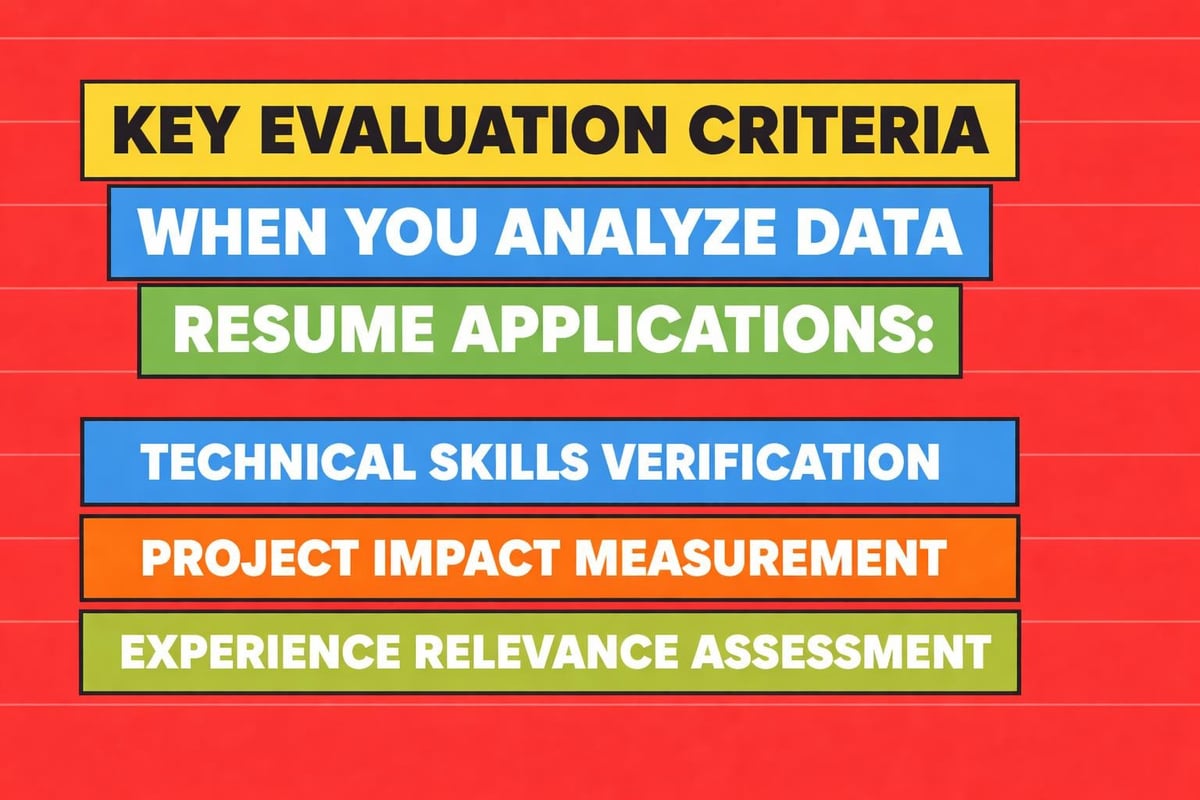
Education credentials require nuanced evaluation in data analytics hiring. While computer science, statistics, mathematics, and economics degrees provide strong foundations, many successful analysts come from unconventional backgrounds. Certifications from recognized programs demonstrate commitment to professional development. The proliferation of online learning means data analyst resume construction now includes diverse educational pathways that recruiters must assess fairly.
Establishing Efficient Screening Criteria
Creating standardized evaluation frameworks ensures consistency when you analyze data resume submissions at scale. Recruitment teams handling dozens or hundreds of applications need systematic approaches that balance thoroughness with speed.
Developing weighted scoring matrices transforms subjective judgment into objective measurement. Assign point values to essential qualifications versus preferred attributes. For instance, SQL proficiency might carry 20 points as a mandatory skill, while experience with specific industry domains adds 5 bonus points. This quantification enables direct comparison across candidates and reduces unconscious bias in initial screening stages.
Keyword optimization strategies help identify relevant experience quickly. Beyond obvious technical terms, include industry-specific vocabulary and methodology names. Terms like "A/B testing," "cohort analysis," "ETL processes," and "data warehousing" signal specialized knowledge. However, recognize that qualified candidates might describe identical capabilities using different terminology, particularly when transitioning from academic to commercial environments.
Experience level calibration prevents mismatched expectations. Entry-level data analyst resumes emphasize academic projects, internships, and personal portfolio work. Mid-level candidates showcase progressive responsibility across multiple roles with increasing complexity. Senior analysts demonstrate strategic thinking, team leadership, and business impact at organizational scale. Understanding these distinctions helps recruiters set appropriate evaluation standards rather than applying uniform criteria across all experience tiers.
Modern automated resume screening software applies these criteria systematically across entire candidate pools. These platforms parse resume content, extract relevant information, and score applications against predetermined parameters. The technology handles high-volume screening while maintaining consistent evaluation standards that human reviewers struggle to sustain across hundreds of applications.
Identifying Technical Competency Through Resume Analysis
The ability to accurately assess technical skills separates effective data resume analysis from superficial screening. Data analytics requires diverse capabilities spanning multiple domains, and resumes must demonstrate genuine proficiency rather than buzzword inflation.
Programming language expertise manifests through project descriptions that explain implementation details. When candidates mention Python, look for references to specific libraries like Pandas, NumPy, or Scikit-learn. SQL skills become credible through descriptions of complex queries, database optimization, or schema design. Generic statements like "proficient in Python" provide minimal insight compared to "developed machine learning classification models using Python's Scikit-learn library achieving 87% accuracy."
Statistical knowledge evaluation extends beyond tool familiarity. Resumes mentioning hypothesis testing, regression analysis, or time series forecasting indicate theoretical understanding. The application of these techniques to business problems demonstrates practical competency. Candidates who explain how they applied chi-square tests to validate market segmentation or used ANOVA to compare campaign performance reveal deeper analytical thinking.
Data visualization capabilities require assessment beyond software proficiency. Anyone can create charts in Excel or Tableau, but effective data communicators design visualizations that drive decision-making. Resume descriptions should reference dashboard creation for executive audiences, interactive reporting systems, or visualization strategies that simplified complex datasets. The distinction between tool operation and strategic communication separates adequate analysts from exceptional ones.
Industry domain knowledge adds significant value when you analyze data resume applications for specialized roles. Healthcare analytics requires understanding of regulatory compliance and patient privacy. Financial services analytics demands familiarity with risk modeling and fraud detection. Retail analytics focuses on inventory optimization and customer lifetime value. Candidates demonstrating sector-specific expertise bring immediate productivity that reduces onboarding time and accelerates value delivery.
Leveraging AI Technology for Resume Analysis
Artificial intelligence has revolutionized how recruitment teams analyze data resume submissions by automating pattern recognition and candidate comparison. AI-powered recruitment tools process applications faster than human reviewers while maintaining consistent evaluation standards.
Natural language processing extracts semantic meaning from resume content rather than simple keyword matching. This technology identifies synonymous terms, contextual usage, and conceptual relationships. When a candidate describes "customer behavior prediction modeling," AI systems recognize this as equivalent to "predictive analytics" or "propensity modeling" even without exact phrase matches. This semantic understanding reduces false negatives where qualified candidates use different terminology.
Machine learning algorithms identify success patterns by analyzing historical hiring data. These systems learn which resume characteristics correlate with high-performing employees in your organization. The technology might discover that candidates mentioning specific project types, educational backgrounds, or career progression patterns demonstrate stronger job performance. This insight helps prioritize applicants most likely to succeed in your specific environment.
Bias reduction represents a significant advantage when AI systems analyze data resume content. Algorithms focus exclusively on qualifications, skills, and experience rather than demographic factors. Properly configured systems ignore information about age, gender, ethnicity, or other protected characteristics. This objectivity creates fairer evaluation processes and expands talent pools by surfacing qualified candidates who might face unconscious bias in traditional screening.
The speed advantage of automated analysis transforms recruitment timelines. Automated hiring tools can process 200 resumes in the time a human recruiter evaluates five applications. For data analyst positions that frequently attract hundreds of applicants, this efficiency difference determines whether organizations secure top talent before competitors or lose candidates to faster-moving rivals.
Translating Resume Content Into Hiring Decisions
Converting resume analysis into actionable hiring decisions requires moving beyond qualification checklists to holistic candidate evaluation. The goal extends past identifying who meets minimum requirements to determining who offers maximum potential value.
Career trajectory assessment reveals growth patterns and ambition levels. Look for progressive responsibility increases, skill expansion over time, and strategic career moves. A candidate who advanced from junior analyst to senior analyst to analytics manager within five years demonstrates different potential than someone holding the same title across three different companies in the same period. Neither pattern is inherently superior, but they indicate different career orientations that suit different organizational needs.
Project diversity indicates adaptability and learning agility. Candidates who have worked across multiple analytical methodologies, business functions, or industry sectors bring broader perspective than specialists with deep but narrow experience. This versatility matters when hiring for roles requiring cross-functional collaboration or rapidly evolving business environments. Resources like comprehensive resume writing guides help candidates present diverse experience effectively, making this quality easier to identify during screening.
Cultural alignment signals emerge from resume presentation style and content emphasis. Candidates highlighting collaborative projects and team achievements indicate strong interpersonal orientation. Those emphasizing independent research and solo accomplishments suggest preference for autonomous work. Neither approach surpasses the other, but matching candidate work styles to team dynamics improves retention and satisfaction.
Red flags require balanced interpretation when you analyze data resume submissions. Employment gaps, frequent job changes, or credential inconsistencies deserve investigation but not automatic disqualification. The circumstances behind these patterns often reveal reasonable explanations. A gap might reflect caregiving responsibilities, advanced education, or entrepreneurial ventures. Frequent moves could indicate contract work in the gig economy rather than performance issues. Context matters more than surface appearances.
Optimizing the Resume Review Workflow
Streamlining the resume analysis process maximizes recruiter productivity while maintaining evaluation quality. Efficient workflows balance speed with thoroughness by focusing human attention where it adds most value.
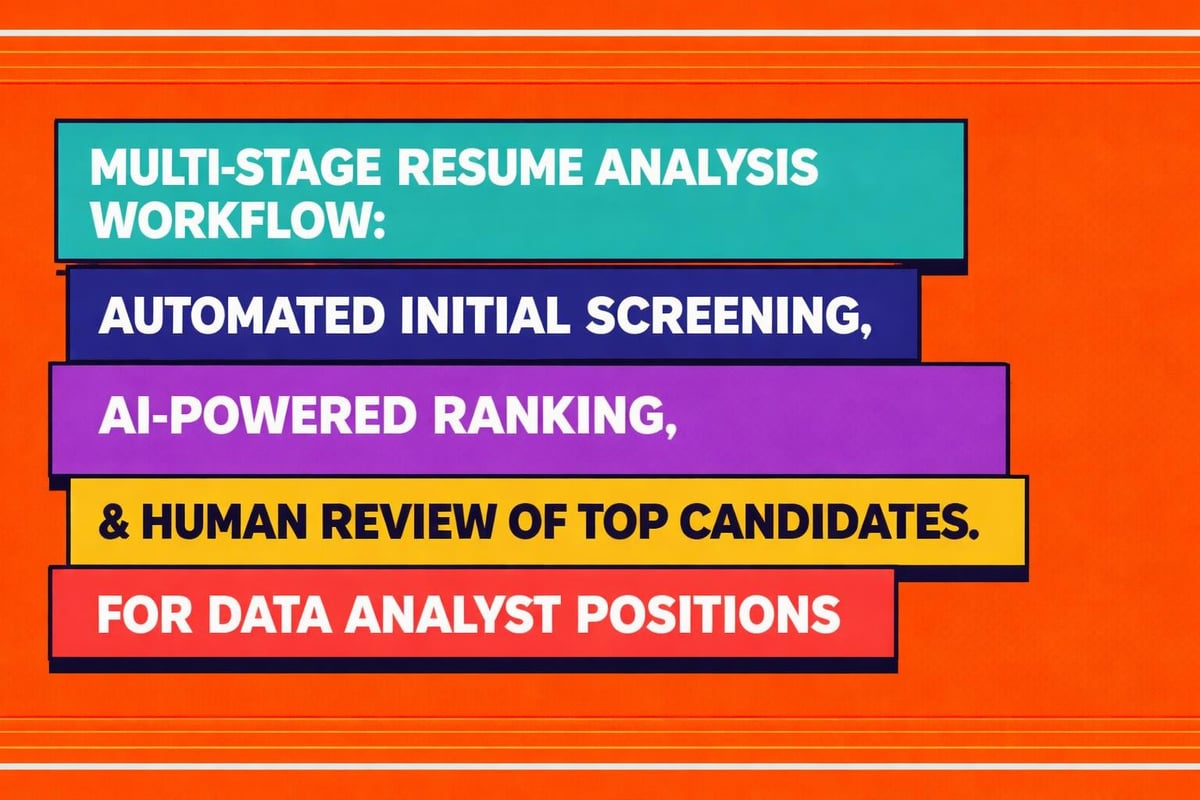
Implementing multi-stage screening funnels structures the evaluation process logically. Initial automated screening eliminates clearly unqualified applications based on hard requirements like minimum education, required certifications, or essential technical skills. This reduces the candidate pool by 60 to 70 percent in typical scenarios. Secondary screening applies weighted scoring to remaining candidates, ranking them by qualification strength. Final human review focuses on top-ranked applicants, typically the top 10 to 15 percent of original submissions.
Collaboration tools enable team-based evaluation without coordination overhead. Cloud-based platforms allow multiple recruiters and hiring managers to review candidates simultaneously, adding ratings and comments visible to all stakeholders. This transparency creates shared understanding and accelerates consensus-building around finalist selection. Integration with applicant tracking systems maintains centralized candidate records across the entire hiring workflow.
Continuous improvement mechanisms refine screening criteria over time. Track which resume characteristics correlate with successful hires versus early terminations or poor performance reviews. This feedback loop identifies which signals genuinely predict job success versus superficial indicators that carry less predictive value. Adjusting screening parameters based on actual outcomes improves hiring quality with each recruitment cycle.
Template standardization for common roles accelerates future hiring. Once you develop effective criteria to analyze data resume applications for specific positions, document these parameters as reusable templates. When similar roles open in the future, apply proven evaluation frameworks rather than reinventing assessment criteria. This consistency also enables better candidate comparison across different hiring cycles.
Addressing Common Resume Analysis Challenges
Recruitment teams encounter predictable obstacles when they analyze data resume submissions at scale. Recognizing these challenges enables proactive mitigation strategies that maintain screening effectiveness.
Resume inflation and skill exaggeration create verification difficulties. Candidates list technologies they briefly encountered in single projects as core competencies. Others claim "expert" status in tools where they possess only basic familiarity. Combat this by focusing on project descriptions that reveal depth of usage rather than simple skill listings. Technical assessments during interview stages validate claimed proficiencies, so initial screening should prioritize breadth of relevant experience over unverified expertise claims.
Unconventional backgrounds require open-minded evaluation. Career changers, self-taught analysts, and bootcamp graduates bring valuable perspectives despite lacking traditional credentials. These candidates often demonstrate exceptional motivation and practical problem-solving abilities that compensate for shorter formal experience. Resources like data analyst resume examples help these applicants present their qualifications effectively, making relevant skills more visible to screeners.
Volume overload threatens evaluation quality when popular positions attract hundreds of applicants. Without systematic approaches, recruiters either spend excessive time reviewing every application thoroughly or rush through screenings superficially, missing qualified candidates. Technology solutions address this challenge directly. Platforms specializing in AI-based recruitment handle high-volume screening while maintaining consistent evaluation standards that prevent qualified candidates from slipping through cracks.
Outdated job descriptions create misalignment between advertised requirements and actual role needs. When technical specifications don't reflect current team priorities, resume screening focuses on irrelevant qualifications while overlooking critical competencies. Regular job description reviews ensure posted requirements match evolving business needs, improving candidate quality and reducing time wasted evaluating misaligned applications.
Measuring Resume Screening Effectiveness
Quantifying screening performance identifies improvement opportunities and demonstrates recruitment team value. Data-driven evaluation of the resume analysis process itself creates accountability and guides resource allocation decisions.
Time-to-shortlist metrics track efficiency gains from process improvements. Measure the elapsed time between application receipt and candidate shortlist completion. Baseline measurements establish starting performance before implementing new tools or workflows. Subsequent measurements quantify improvement, demonstrating return on investment for recruitment technology or process changes. Organizations implementing AI screening typically reduce time-to-shortlist by 60 to 75 percent while improving candidate quality.
Quality-of-hire indicators connect screening decisions to long-term outcomes. Track performance ratings, retention rates, and promotion rates for employees sourced through different screening methods. This analysis reveals which evaluation approaches identify candidates who become high performers versus those who underperform or leave quickly. Superior screening processes produce higher percentages of top-tier hires and lower early-turnover rates.
Candidate experience scores reflect how applicants perceive the screening process. Survey rejected candidates about communication timeliness, process transparency, and overall professionalism. Positive experiences maintain employer brand strength even among unsuccessful applicants. Negative experiences damage reputation and reduce future application rates. Efficient screening enables faster rejection notifications, improving candidate experience through reduced uncertainty.
Cost-per-hire calculations demonstrate financial impact of screening efficiency. Include recruiter time, technology subscriptions, and opportunity costs of delayed hiring in total cost measurements. More efficient resume analysis reduces overall recruitment costs by accelerating processes and improving first-choice acceptance rates. Organizations typically reduce cost-per-hire by 30 to 40 percent through optimized screening workflows.
Integrating Resume Analysis With Broader Hiring Strategy
Effective resume screening functions as one component within comprehensive talent acquisition strategies. Integration with other hiring stages creates seamless candidate experiences and maximizes overall recruitment effectiveness.
Skills assessments validate resume claims during later hiring stages. Technical tests measuring SQL proficiency, statistical reasoning, or data visualization capabilities confirm competencies mentioned in applications. This verification reduces false positives where candidates overstated abilities and identifies false negatives where candidates undersold their skills. The combination of resume screening and skills testing produces more accurate capability assessment than either method alone.
Structured interviews explore dimensions that resumes cannot capture. Problem-solving approaches, communication styles, and cultural alignment emerge through conversation rather than written applications. Resume analysis identifies candidates worth interviewing, while interviews reveal whether paper qualifications translate to practical job fit. This sequential filtering efficiently allocates expensive interview time to highest-potential candidates.
Reference checks provide external validation of resume content and interview impressions. Former supervisors confirm employment dates, job responsibilities, and performance levels. These conversations sometimes reveal discrepancies with resume claims or uncover strengths not apparent through other evaluation methods. Systematic reference checking completes the verification process begun during resume screening.
Offer acceptance rates measure how well screening identifies candidates genuinely interested in your opportunities. Low acceptance rates suggest resume analysis focuses on qualifications without considering candidate preferences, leading to mismatched offers. High acceptance rates indicate screening successfully identifies both qualified and interested candidates, maximizing recruitment efficiency.
Successfully analyzing data analyst resumes requires systematic approaches that balance efficiency with thoroughness, ensuring qualified candidates receive fair evaluation while managing high application volumes effectively. Modern recruitment teams leverage artificial intelligence to automate initial screening, apply consistent evaluation criteria, and surface top candidates within minutes rather than days. Klearskill transforms this process by using AI to analyze candidate CVs and rank applicants instantly, delivering qualified shortlists that accelerate hiring timelines while improving candidate quality. Recruitment teams can focus their expertise on relationship-building and final selection rather than manual resume review, fundamentally improving hiring outcomes.


