
March 26, 2026
Analyze CV: Complete Guide for Modern Recruiters
The ability to analyze cv submissions effectively separates successful recruitment teams from those drowning in applications. Modern recruiters receive hundreds of CVs for every open position, making traditional manual review methods obsolete. Understanding how to systematically evaluate candidate documents saves time, reduces bias, and ensures the best talent reaches interview stages. This comprehensive guide explores proven techniques, cutting-edge technology, and strategic approaches that transform CV analysis from a bottleneck into a competitive advantage.
Understanding the CV Analysis Process
When you analyze cv documents, you're essentially extracting structured information from unstructured text. Every CV tells a story about a candidate's professional journey, but that story must align with your specific requirements. The challenge lies in identifying relevant qualifications while filtering out noise.
Traditional CV analysis involves reading each document line by line, comparing experience levels, checking educational backgrounds, and assessing skill matches. This manual approach worked when companies received twenty applications per role. In 2026, with digital job boards and social recruiting expanding applicant pools, roles often attract five hundred or more submissions within days of posting.
The modern approach to analyze cv submissions incorporates multiple evaluation criteria simultaneously. Recruiters assess technical competencies, cultural fit indicators, career progression patterns, and achievement metrics. Each data point contributes to an overall candidate score that determines who advances to the next hiring stage.
Professional recruitment teams typically establish standardized frameworks before reviewing applications. These frameworks define must-have qualifications versus nice-to-have attributes, weight different experience types appropriately, and create consistent scoring mechanisms across all reviewers.
Key Elements to Evaluate When You Analyze CV Documents
Professional experience sections reveal more than job titles and employment dates. When you analyze cv work histories, examine progression patterns that indicate growth mindset and ambition. Candidates who advance from junior to senior roles within organizations demonstrate value creation and retention potential.
Quantifiable achievements separate exceptional candidates from average ones. Look for metrics that demonstrate impact: revenue generated, costs reduced, projects completed, teams managed, or systems improved. Numbers provide objective evidence of capability beyond generic responsibility descriptions.
Educational credentials require contextual evaluation. A degree from twenty years ago may matter less than recent certifications in rapidly evolving fields like artificial intelligence or cybersecurity. When you analyze CV submissions using automated resume screening software, ensure your criteria account for both formal education and continuous learning indicators.
Skills sections often contain the most relevant information for technical roles. However, candidates frequently list every tool they've touched rather than focusing on genuine proficiencies. Cross-reference claimed skills with actual usage examples in work experience descriptions. True expertise shows up in project accomplishments, not just keyword lists.
Employment gaps deserve attention without automatic disqualification. The pandemic created legitimate career interruptions for millions of professionals. When you analyze cv timelines, consider whether gaps include freelance work, education, caregiving, or entrepreneurial ventures that developed transferable abilities.
Overcoming Common Challenges in CV Analysis
Volume represents the primary obstacle when recruiters analyze cv applications for popular positions. A single engineering role at a well-known technology company might generate two thousand submissions. Even spending three minutes per CV creates one hundred hours of work before anyone reaches phone screen stage.
Formatting inconsistencies complicate extraction of structured data. Candidates use diverse templates, layouts, and styles. One CV might present skills in a sidebar table while another buries them within paragraph text. When you analyze cv documents manually, these variations slow processing and increase information oversight risks.
Keyword gaming creates false positives that waste interviewer time. Sophisticated candidates understand how applicant tracking systems work and optimize their documents accordingly. They stuff CVs with terms from job descriptions regardless of actual proficiency. Surface-level keyword matching identifies these candidates while missing genuinely qualified individuals who describe their experience differently.
Unconscious bias affects human reviewers despite best intentions. Research consistently shows that identical CVs receive different evaluations based solely on perceived gender, ethnicity, or age signals. Names, university locations, and graduation dates all trigger subconscious preferences that compromise merit-based selection.
Inconsistent evaluation standards emerge when multiple team members review applications. Different recruiters weight criteria differently, apply varying strictness levels, and make subjective judgments that reduce hiring fairness. When five people analyze cv submissions independently, the same candidate might receive vastly different scores.
Leveraging Technology to Analyze CV Submissions
Artificial intelligence revolutionizes how recruitment teams approach CV analysis. Modern platforms process thousands of documents in seconds, extract relevant information automatically, and rank candidates based on customizable criteria. These systems eliminate manual data entry while maintaining consistency across all evaluations.
AI-powered recruitment tools use natural language processing to understand context beyond simple keyword matching. They recognize synonyms, assess experience relevance, and identify transferable skills that traditional parsing misses. When you analyze cv content through AI systems, you capture nuanced qualifications that manual review overlooks.
Machine learning algorithms improve with each hiring outcome. Systems track which candidate characteristics correlate with successful hires, then adjust future rankings accordingly. This continuous optimization creates increasingly accurate predictions about candidate performance potential.
Several specialized platforms focus specifically on CV analysis capabilities. Tools like CVscanr offer instant resume scoring and ranking features that identify top candidates automatically. Similarly, CValyze provides AI-driven CV scoring with hiring recommendations based on multiple evaluation criteria.
Resume compatibility checking has become essential as applicant tracking systems filter submissions. Services such as TopCV's ATS Analyzer evaluate how well CVs perform against common filtering systems, helping both candidates and recruiters optimize documents for maximum visibility.
Integration between CV analysis tools and existing recruitment workflows eliminates data silos. Modern platforms connect with automated hiring tools to create seamless candidate progression from application through offer. This connectivity reduces administrative overhead while improving candidate experience through faster response times.
Establishing Effective Criteria Before You Analyze CV Applications
Successful CV analysis begins long before the first document arrives. Recruitment teams must define precise requirements that differentiate essential qualifications from preferences. This clarity prevents scope creep that expands candidate pools unnecessarily while maintaining standards that ensure quality hires.
Job descriptions serve as the foundation for CV evaluation criteria. Every requirement listed should connect directly to actual job performance needs. Generic phrases like "team player" or "self-starter" provide no measurable evaluation standard. Instead, specify collaboration tool proficiency or independent project completion track records.
Weighting different qualification categories prevents overemphasis on single factors. A candidate with perfect educational credentials but no practical experience may score lower than someone with strong work history despite non-traditional learning paths. When you analyze cv submissions, applying weighted scoring reflects real-world success predictors more accurately than binary yes/no checklists.
Skills taxonomies create consistency in technical evaluations. Programming languages, software platforms, and methodologies often have multiple names or versions. Establishing equivalencies beforehand ensures that candidates using different terminology for identical capabilities receive appropriate credit.
Experience level definitions must account for role complexity rather than just years worked. Five years managing enterprise implementations demonstrates more relevant expertise than ten years performing routine maintenance. When you analyze cv experience sections, evaluate scope and responsibility progression alongside tenure.
Analyzing CVs for Cultural and Soft Skill Indicators
Technical qualifications get candidates into consideration pools, but cultural alignment and soft skills determine long-term success. CVs contain subtle signals about communication style, work preferences, and value alignment when you know where to look.
Writing quality throughout CV documents indicates communication capabilities. Clear, concise descriptions suggest strong verbal and written skills essential for client-facing roles. Conversely, jargon-heavy or grammatically flawed content may signal communication challenges that create friction in collaborative environments.
Career narrative consistency reveals self-awareness and strategic thinking. Candidates who articulate clear progression logic demonstrate intentionality about professional development. When you analyze cv career paths, look for coherent stories that connect each role to broader objectives rather than random job hopping.
Volunteering, side projects, and professional associations indicate passion and engagement. These activities show candidates invest personal time developing expertise and contributing to communities. Such commitment often correlates with higher job satisfaction and retention rates.
Leadership indicators extend beyond formal management titles. Look for project ownership, mentorship responsibilities, cross-functional coordination, and initiative-taking examples. These experiences demonstrate leadership potential regardless of hierarchical position.
Measuring Quality When You Analyze CV Data
Quality metrics transform CV analysis from subjective art into measurable science. Recruitment teams that track performance indicators continuously improve their evaluation accuracy and hiring outcomes.
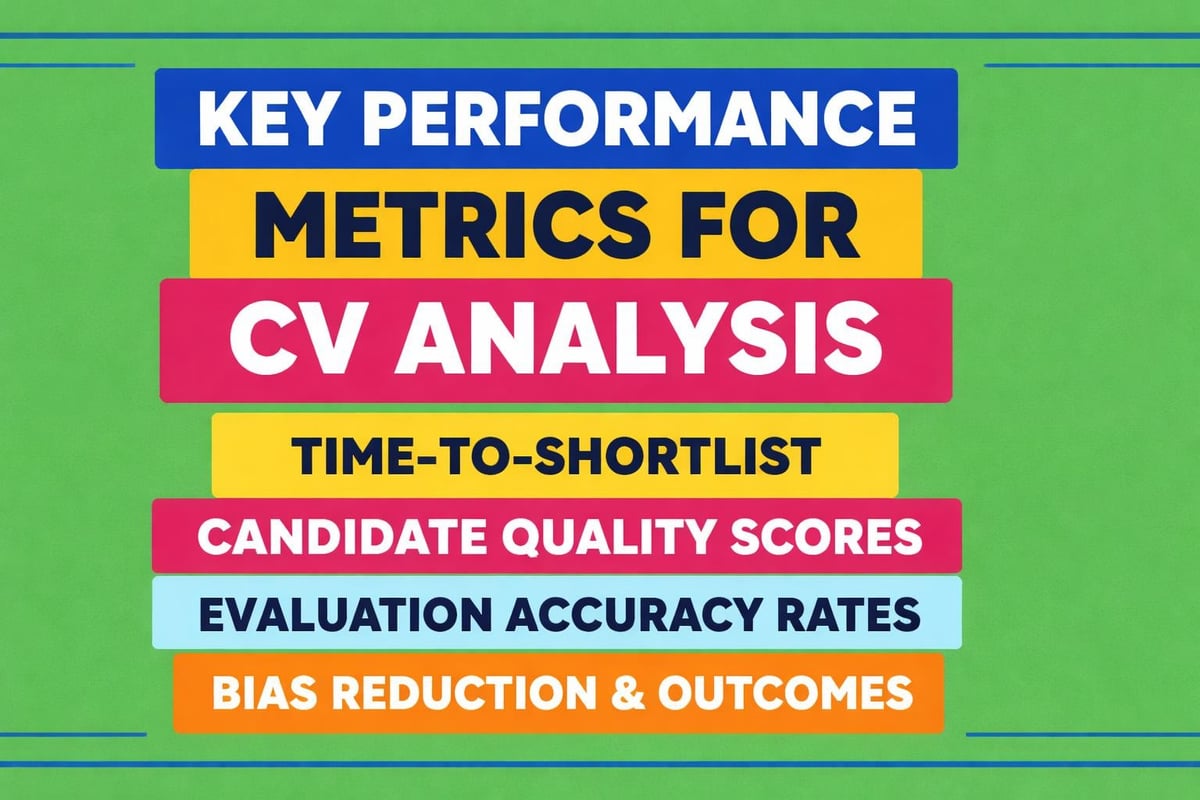
Time-to-shortlist measures efficiency gains from improved CV analysis processes. Baseline manual review speeds provide comparison points for measuring technology implementation impact. Reducing this metric from weeks to days accelerates entire hiring timelines and improves candidate experience.
Shortlist-to-interview conversion rates indicate evaluation accuracy. If ninety percent of shortlisted candidates advance to interviews, your CV analysis effectively identifies qualified individuals. Low conversion suggests overly generous criteria that waste interviewer time on unsuitable candidates.
Interview-to-offer ratios reveal whether shortlists contain truly top-tier talent. High ratios mean your CV analysis successfully differentiates exceptional candidates from merely qualified ones. This metric directly impacts hiring manager satisfaction with recruitment support.
Quality-of-hire assessments connect CV analysis decisions to long-term performance outcomes. Track new hire performance ratings, retention rates, and promotion speeds segmented by CV analysis scores. Strong correlations validate your evaluation criteria while weak relationships signal needed adjustments.
Advanced Techniques for Specialized CV Analysis
Technical role recruitment requires domain-specific evaluation approaches. When you analyze cv documents for software engineers, assess GitHub contributions, open-source project involvement, and technical blog authorship alongside traditional credentials. These artifacts provide concrete evidence of coding ability and community engagement.
Executive-level CV analysis emphasizes strategic thinking and business impact. Look for board memberships, speaking engagements, published thought leadership, and measurable organizational transformations. Executive accomplishments should demonstrate scope that extends beyond departmental boundaries.
Creative role evaluations depend heavily on portfolio quality rather than CV content alone. When you analyze cv submissions from designers, writers, or marketers, treat the document itself as a work sample. Layout creativity, personal branding consistency, and presentation polish all signal professional capabilities.
International candidate evaluation requires cultural context awareness. Educational systems, career progression norms, and credential frameworks vary significantly across countries. Platforms like Ajiriwa's CV Analyzer help assess international CVs against job descriptions while accounting for these differences.
Career change candidates present unique evaluation challenges. Their CVs show experience in different industries or functions, requiring transferable skill identification. When you analyze cv applications from career changers, focus on core competencies and learning agility indicators rather than direct experience matches.
Creating Feedback Loops That Improve CV Analysis Over Time
Continuous improvement separates good recruitment processes from great ones. Systematic feedback collection reveals which CV analysis criteria actually predict successful hires versus those that merely seem important.
Hiring manager input provides essential quality signals. After new employees complete onboarding, ask hiring managers to evaluate how well CV analysis predicted actual performance. Discrepancies between predicted and observed capabilities highlight criteria needing refinement.
New hire surveys capture candidate perspectives on evaluation fairness and process efficiency. Understanding how candidates experienced your CV analysis informs improvements that enhance employer brand while maintaining selection rigor.
Rejection analysis identifies potential false negatives. Periodically review rejected CVs from campaigns where you struggled to fill positions. This backward look sometimes reveals qualified candidates who scored poorly due to criteria misalignment or evaluation errors.
Benchmarking against industry standards ensures your CV analysis keeps pace with evolving best practices. Professional networks, recruitment conferences, and AI tools for recruitment provide insights into emerging techniques that might strengthen your evaluation approach.
Balancing Speed and Accuracy in CV Analysis
Recruitment timelines compress annually as talent competition intensifies. Top candidates receive multiple offers within days of beginning job searches. When you analyze cv submissions slowly, qualified individuals accept positions elsewhere before your evaluation completes.
Automation enables speed without sacrificing thoroughness. AI systems review hundreds of CVs in the time human recruiters analyze five. This velocity allows rapid response to applications while maintaining evaluation depth that identifies truly exceptional talent.
Prioritization strategies focus human attention where it creates most value. Technology handles initial screening and ranking while recruiters conduct nuanced assessments of top-scored candidates. This division of labor combines machine efficiency with human judgment.
Real-time analysis capabilities transform candidate experience. Modern platforms analyze cv submissions instantly upon receipt, providing immediate acknowledgment and next-step guidance to applicants. This responsiveness differentiates employer brands in competitive talent markets.
Quality assurance checkpoints prevent speed from compromising accuracy. Even with automated systems, sample manual reviews verify that algorithms function as intended. These audits catch drift before it affects hiring outcomes significantly.
Privacy and Compliance Considerations in CV Analysis
Data protection regulations impose strict requirements on how organizations handle CV information. When you analyze cv documents, you process personal data subject to GDPR, CCPA, and similar privacy frameworks globally.
Consent mechanisms must clearly explain what analysis occurs and how long data persists. Candidates deserve transparency about whether humans, algorithms, or both review their CVs. Privacy notices should specify data retention periods and deletion processes.
Bias mitigation extends beyond fairness to legal compliance. Discriminatory hiring practices create liability regardless of whether bias stems from human prejudice or algorithmic design. When you analyze cv submissions through AI systems, regular audits ensure protected characteristics don't influence rankings inappropriately.
Data security protects candidate information from unauthorized access. CVs contain sensitive personal details that require encryption, access controls, and breach response procedures. Professional recruitment platforms implement enterprise-grade security that individual recruiters cannot match.
International transfers add complexity when candidates apply from different countries. Cross-border data movement requires adequate protection mechanisms under various privacy regimes. Cloud-based CV analysis platforms typically address these requirements through standard contractual clauses and certification programs.
Future Trends Shaping How We Analyze CV Documents
Skills-based hiring continues gaining momentum over credential-focused evaluation. As traditional degree requirements soften, CV analysis increasingly emphasizes demonstrated capabilities through projects, certifications, and work samples. When you analyze cv content in 2026, skills validation through independent assessments complements document review.
Video CVs and multimedia portfolios supplement traditional text documents. Platforms emerge that allow candidates to present themselves through recorded introductions, project demonstrations, and interactive portfolios. Future CV analysis will incorporate multimodal assessment that evaluates communication presence alongside written credentials.
Blockchain-verified credentials eliminate resume fraud that costs organizations millions annually. When educational institutions and previous employers publish verified achievement records on distributed ledgers, CV analysis shifts from credential verification toward cultural fit and potential assessment.
Continuous candidate engagement replaces point-in-time application review. Organizations build talent communities where they analyze cv updates and skill development over months or years. This ongoing relationship enables proactive outreach when relevant positions open rather than reactive application processing.
Predictive analytics forecast candidate success with increasing accuracy. Machine learning models trained on thousands of hiring outcomes identify subtle CV patterns that correlate with performance, retention, and cultural contribution. These insights enable confidence in counterintuitive hiring decisions that human intuition might reject.
The shift toward intelligent CV analysis represents more than technological advancement. It reflects fundamental recognition that manual review cannot match modern hiring demands for speed, accuracy, and fairness. Organizations that master systematic candidate evaluation gain decisive advantages in talent competition while those clinging to outdated methods face growing disadvantages. Klearskill transforms how recruitment teams analyze CV submissions through AI technology that ranks candidates instantly, delivering qualified shortlists in moments rather than weeks so you can focus on connecting with top talent instead of drowning in applications.


